📍 Dumulmeori, Yangpyeong-gun, Gyeonggi-do · Google Maps
📅 Visited: April 28, 2026
💰 Budget: ~13,000 KRW (~$10 USD) for snacks + drinks
⭐ Worth the trip? Yes — especially if you go early
I didn’t expect much from this one. “Just a riverside spot near Seoul,” my friend said.
An hour drive, mostly highway — didn’t sound like anything special. But the moment I stepped out of the car and walked toward that massive old tree by the water, something shifted — cool river air hit my face, and somewhere ahead came the soft sound of water moving through reeds.
The kind of thing where you stop mid-step and just… breathe.
Dumulmeori (두물머리) literally means “where two waters meet” — the North Han River and the South Han River meet right here in a quiet corner of Yangpyeong, Gyeonggi-do. It’s been a loved spot for Korean locals for generations.
Most foreign visitors have never heard of it. Which honestly makes it even better.

Getting there

From Seoul, it’s about an hour by car via the Olympic Highway (올림픽대로). That said — brace yourself for traffic, especially on weekends.
Even though it’s technically close to Seoul, the roads leading into Yangpyeong can back up pretty badly. I left at what felt like a reasonable time.
Wasn’t early enough. Leave earlier than you think you need to.
No car? Take the Gyeongui-Jungang Line from Yongsan Station toward Yangpyeong and get off at Yangsu Station (양수역) — about 50 minutes on the train and surprisingly pleasant.
From the station exit, it’s roughly a 15-minute walk or a short taxi (around 4,000–5,000 KRW, roughly $3–4) to the entrance.
There are several free public parking lots scattered around the area, which is generous. The catch: on a weekend, I spent 40 minutes just getting out of the parking lot.
Not sitting in traffic to Yangpyeong — just leaving the lot itself. Plan accordingly.
What to see


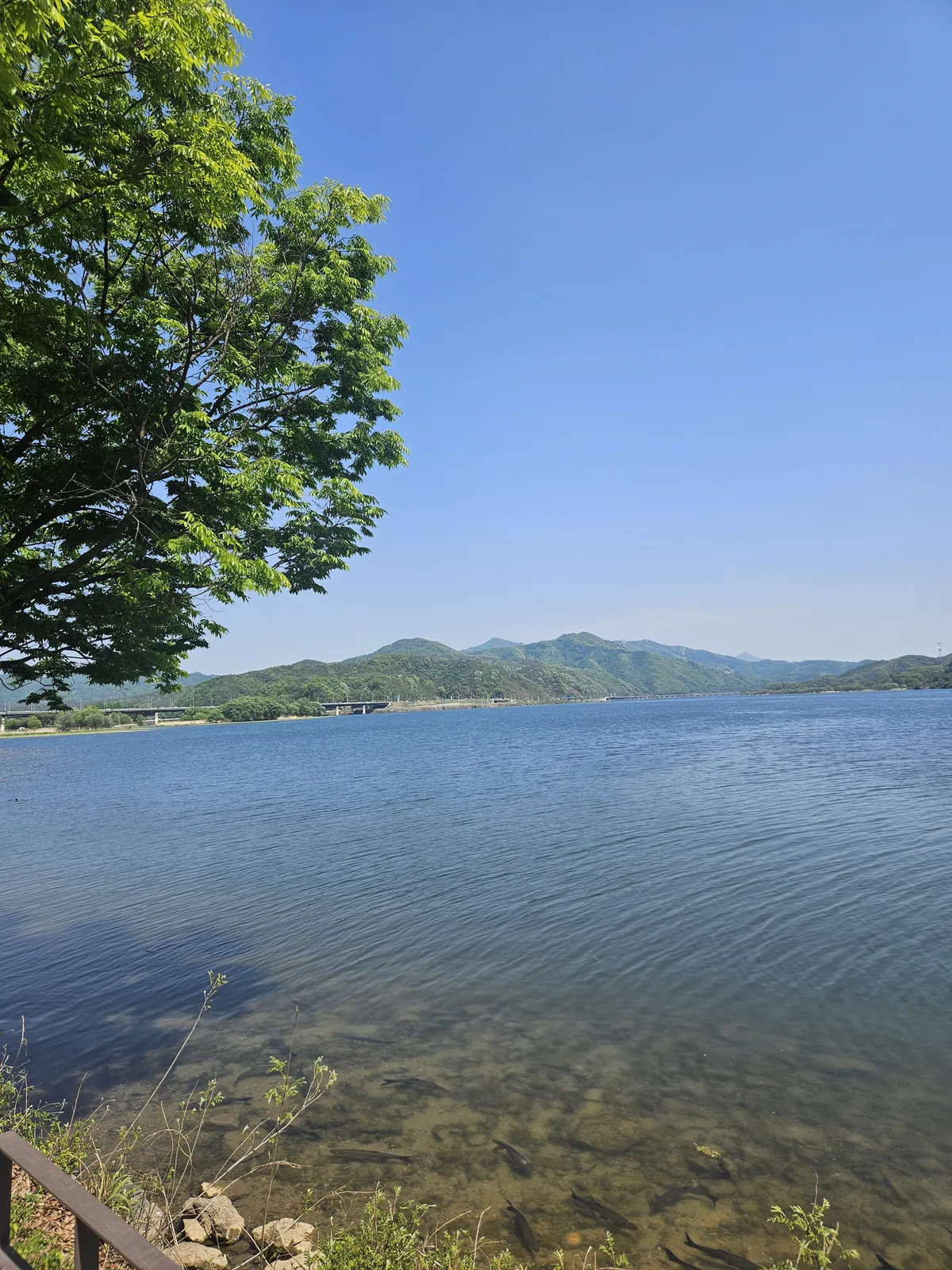
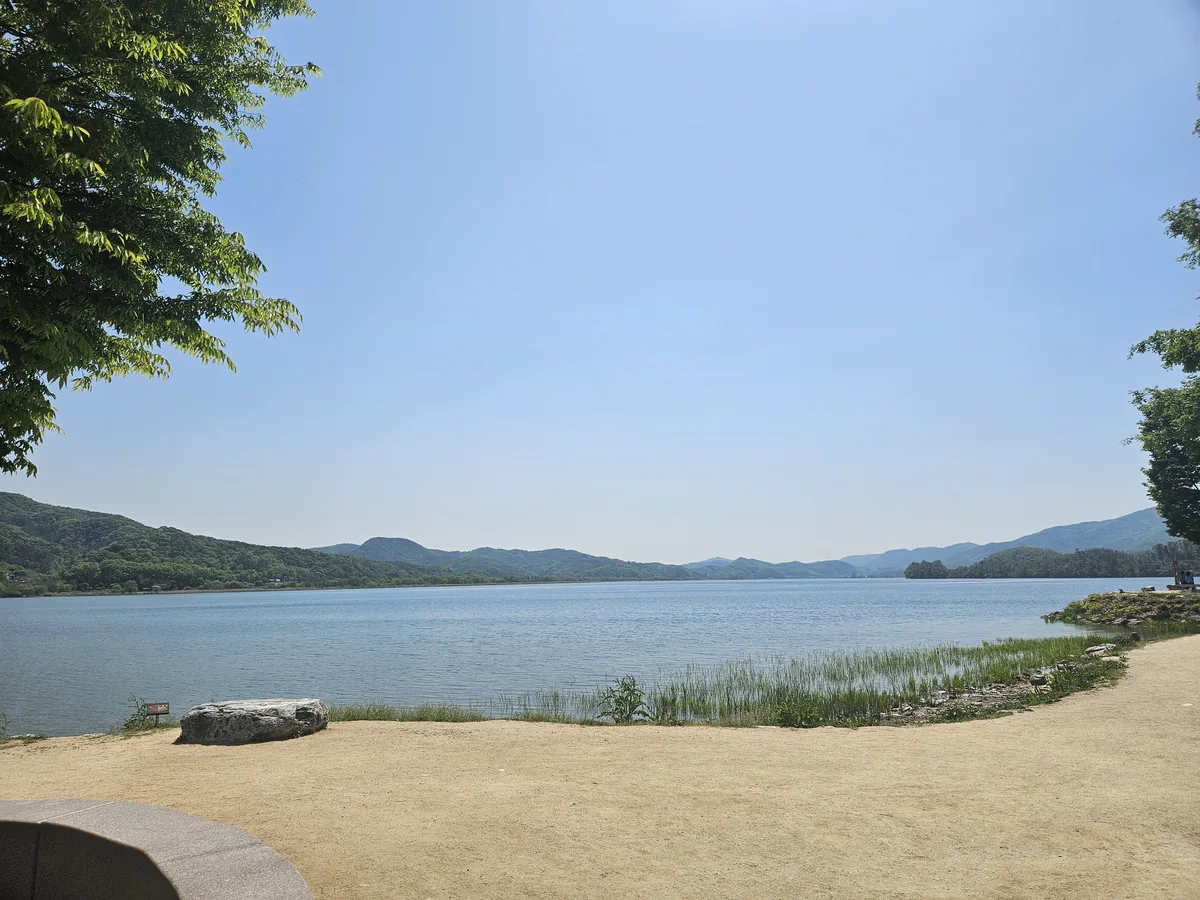
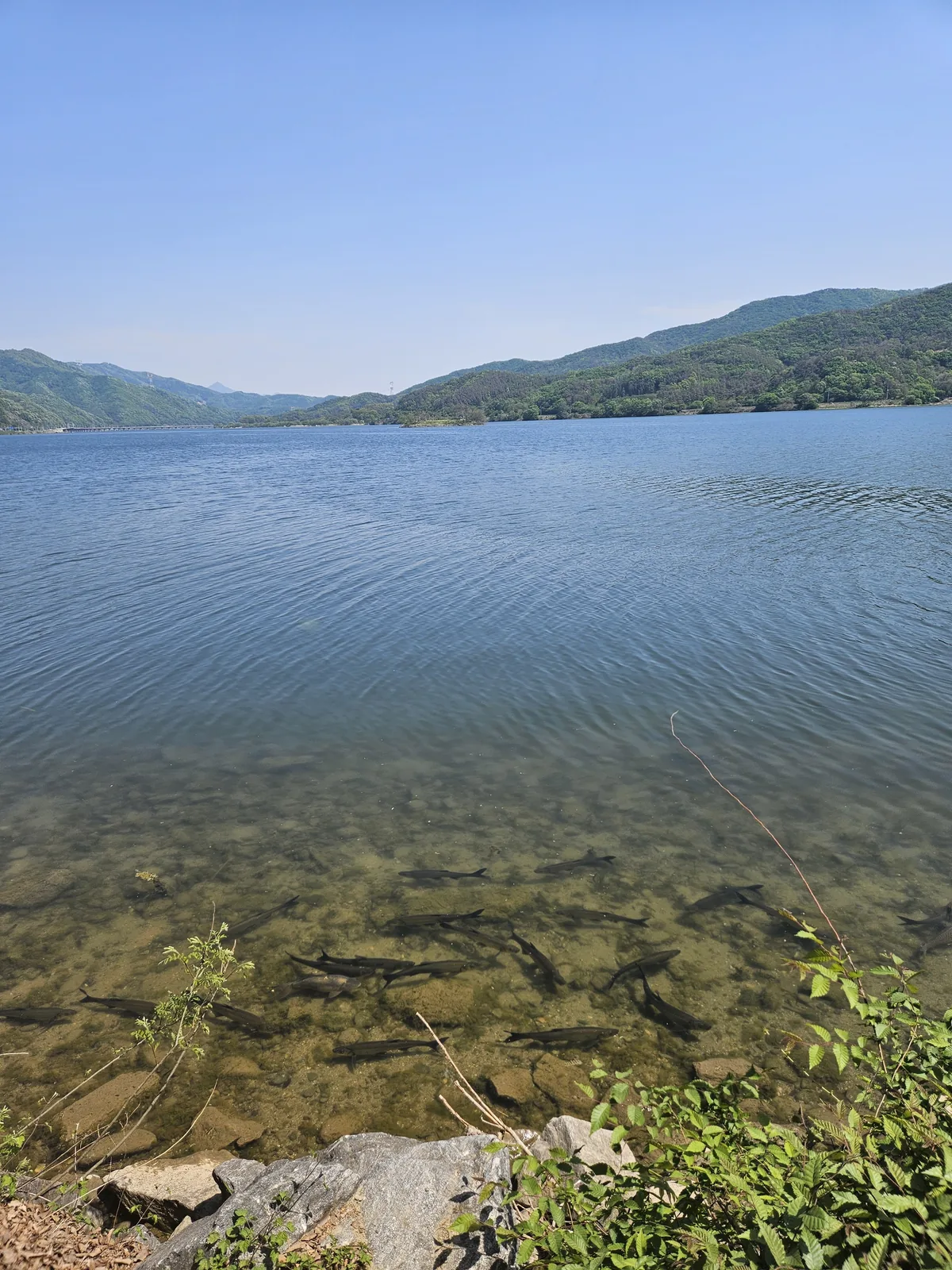
The view hits you immediately. The river stretches out wide and flat, reflecting the sky, with soft mountain layers in the background.
It’s not the kind of view that makes you gasp — it’s quieter than that. The kind that makes your chest feel lighter somehow.
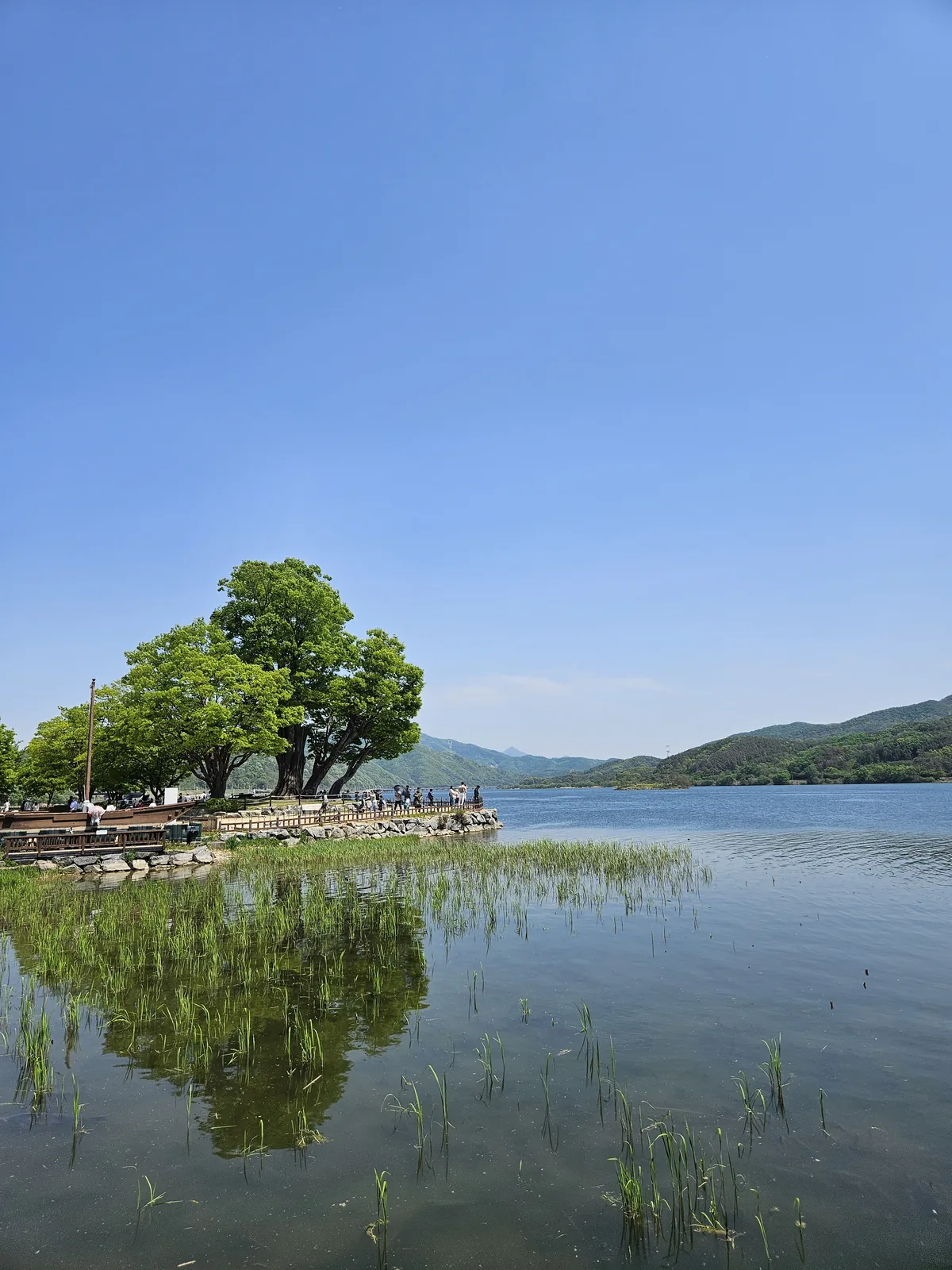
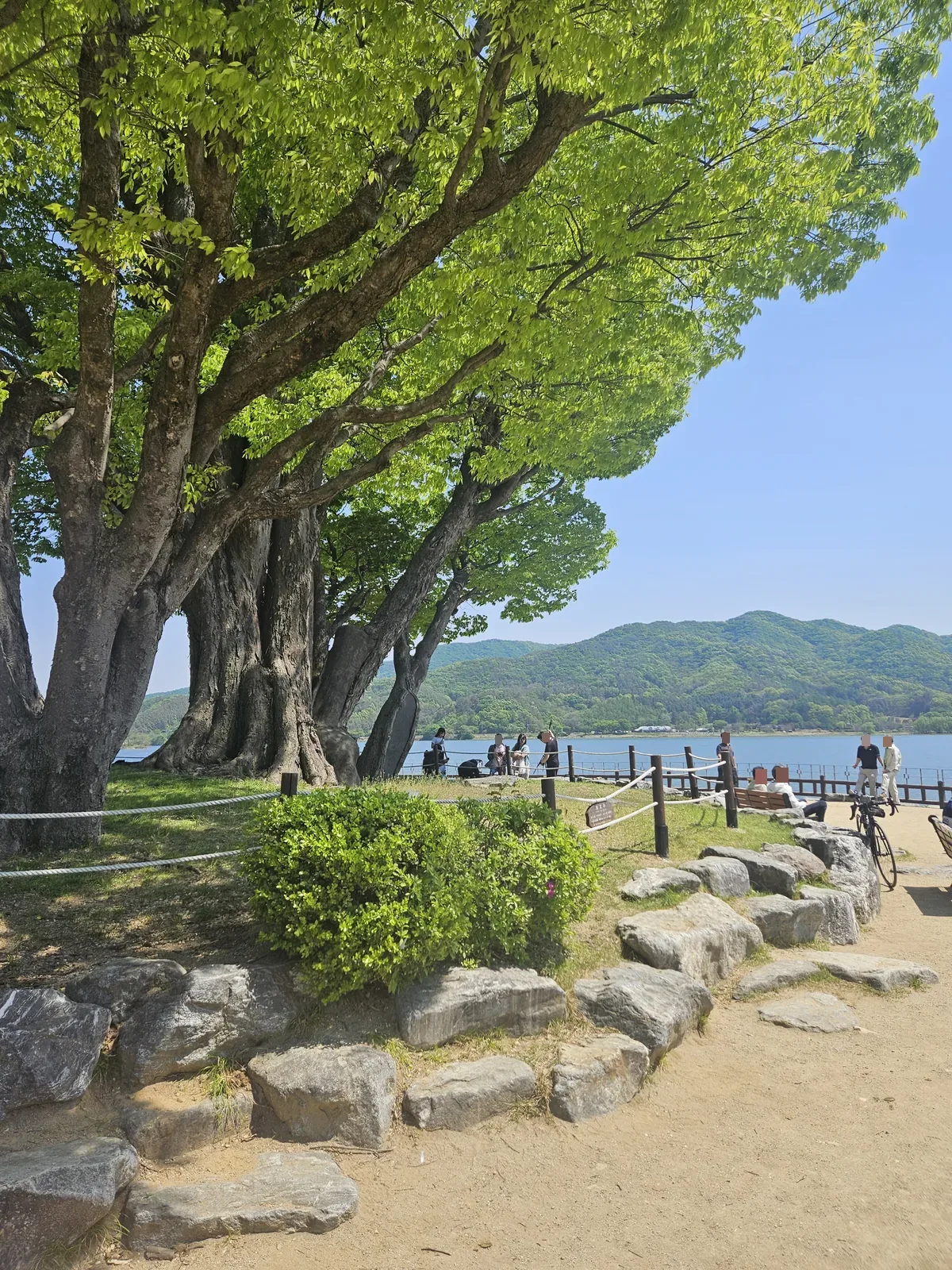
As shown in my photos of the two rivers meeting, the flat water and the mountain line behind it feel different in person — calmer and wider than any photo shows. The main landmark is a 400-year-old willow tree right at the water’s edge.
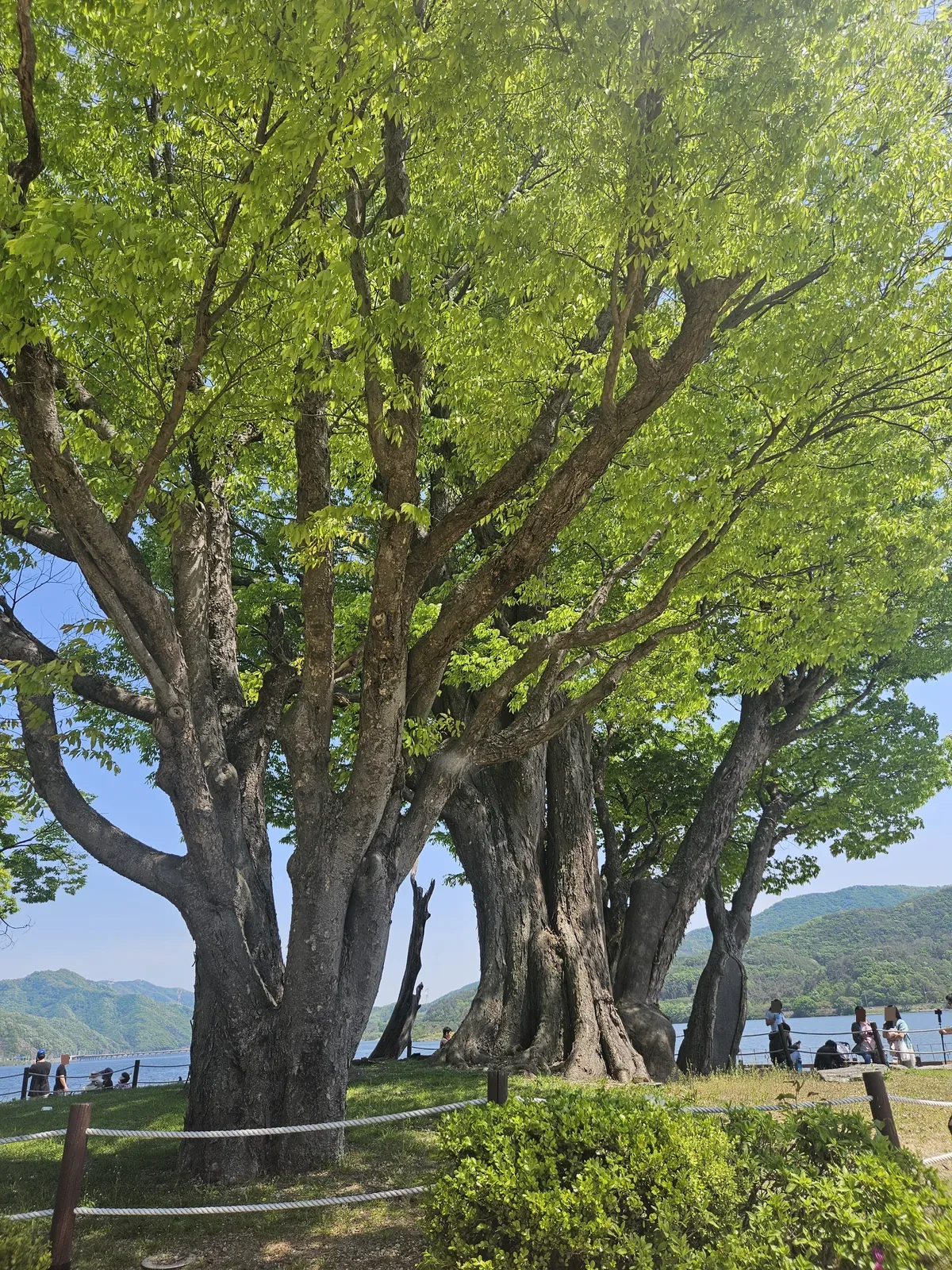
It’s massive — wide and low-hanging, the kind of tree that photographers circle for 20 minutes trying to find the right angle. As shown in my photos of the willow, the branches hang low enough to brush your shoulder if you stand underneath — that kind of old, heavy closeness. The bark is rough and deeply lined under your fingers, the way very old wood gets. It makes the rest of your day feel less urgent somehow.
Even as a self-described terrible photographer, I ended up with shots I was genuinely happy with. The morning light here is something else.
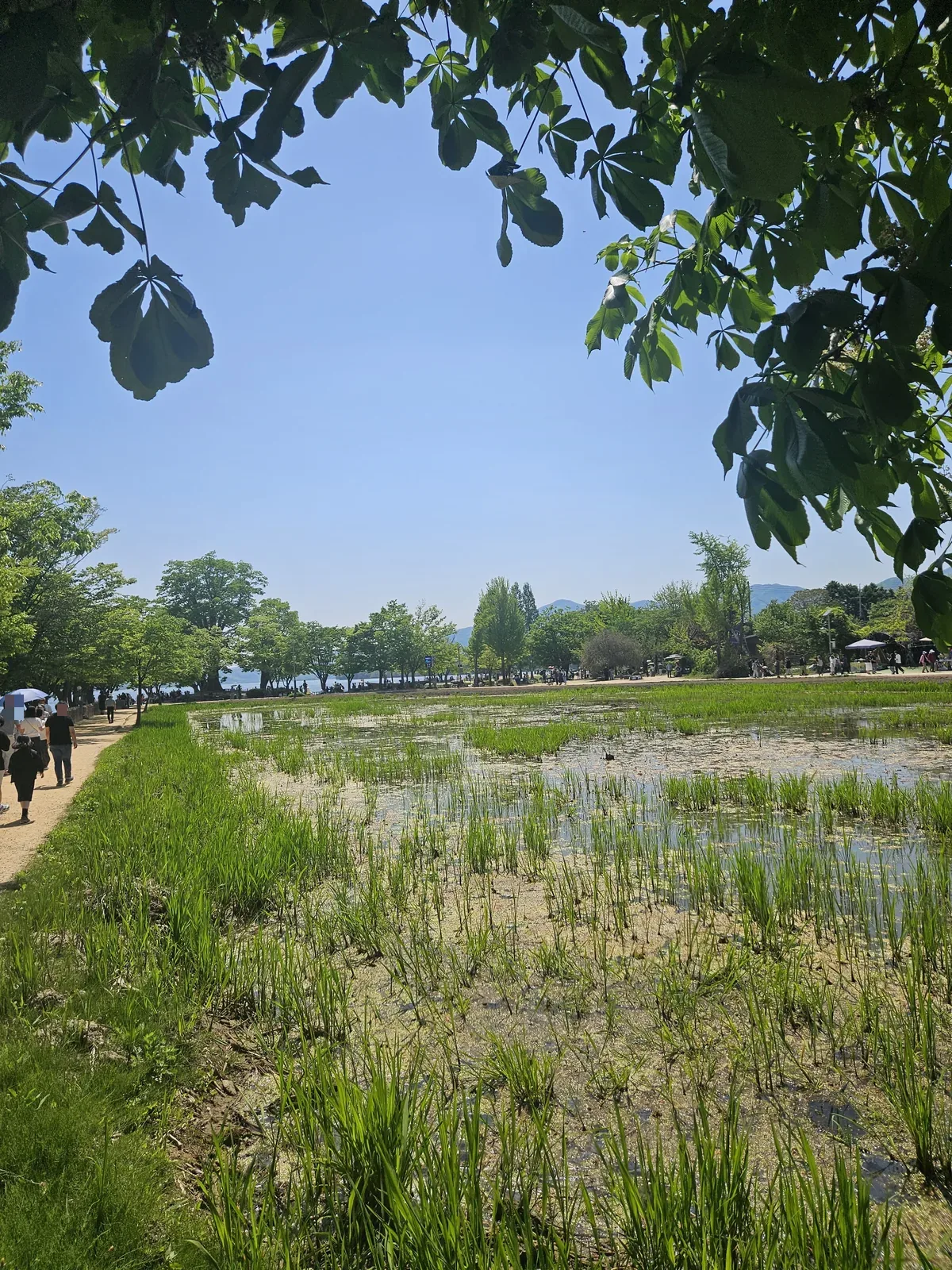
Walk along the riverside path and you’ll find lotus fields stretching out toward the water. I visited in late April and they hadn’t bloomed yet — but even the pre-bloom pads floating on the surface had a quiet kind of beauty to them. The air along this section smells of damp earth and still water — clean in a way that outdoor air in Seoul never quite manages.
If you have extra time, Semiwon Garden (세미원) sits right next door — a wetland garden with walking paths, pavilions, and lotus flowers in season. Entry is around 5,000–7,000 KRW and worth it if you enjoy that sort of quiet stroll.
There’s also a traditional reed bridge called Baedari (배다리) that spans part of the water nearby — genuinely photogenic, nothing overbuilt about it.
What to eat nearby


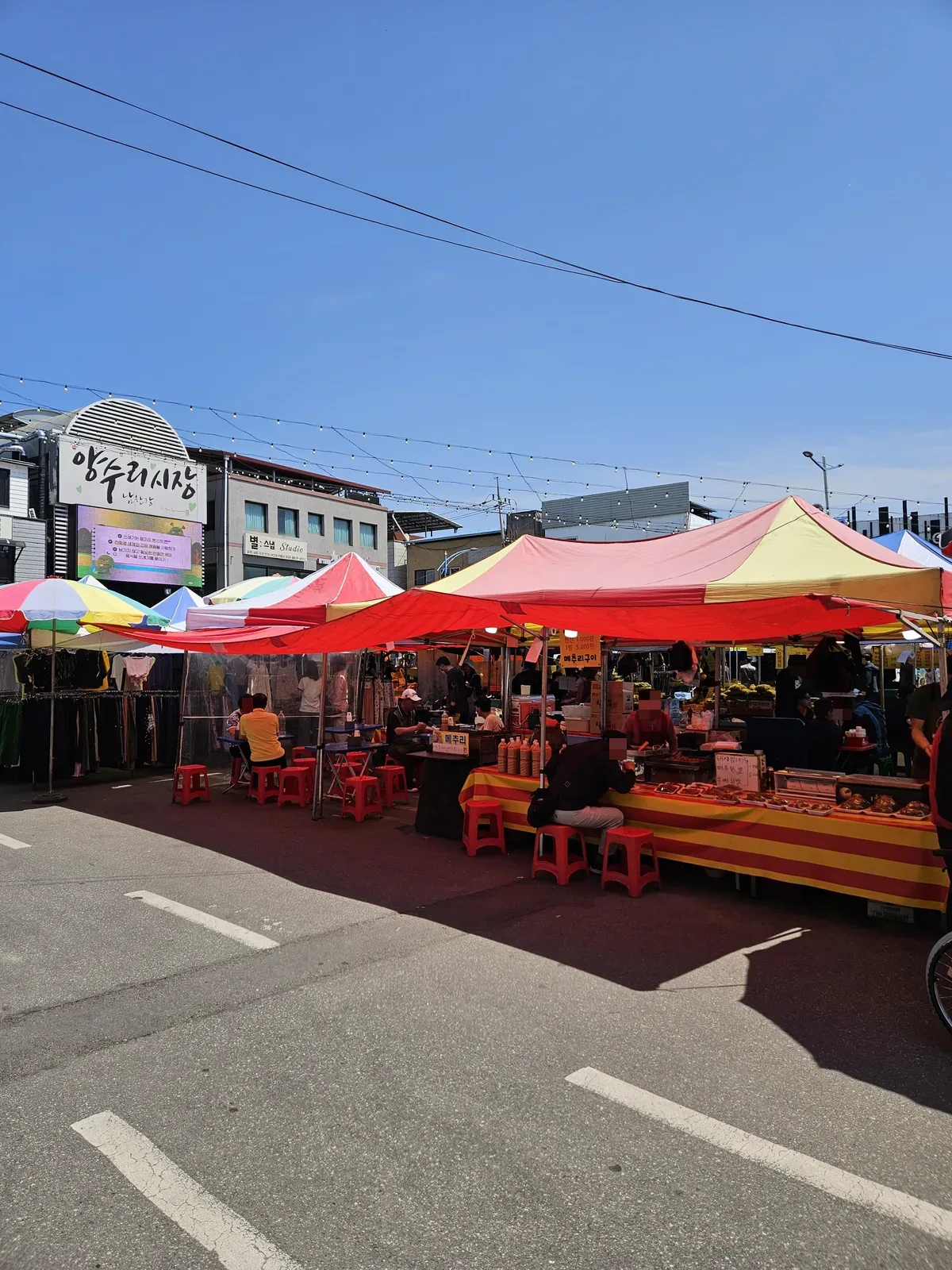
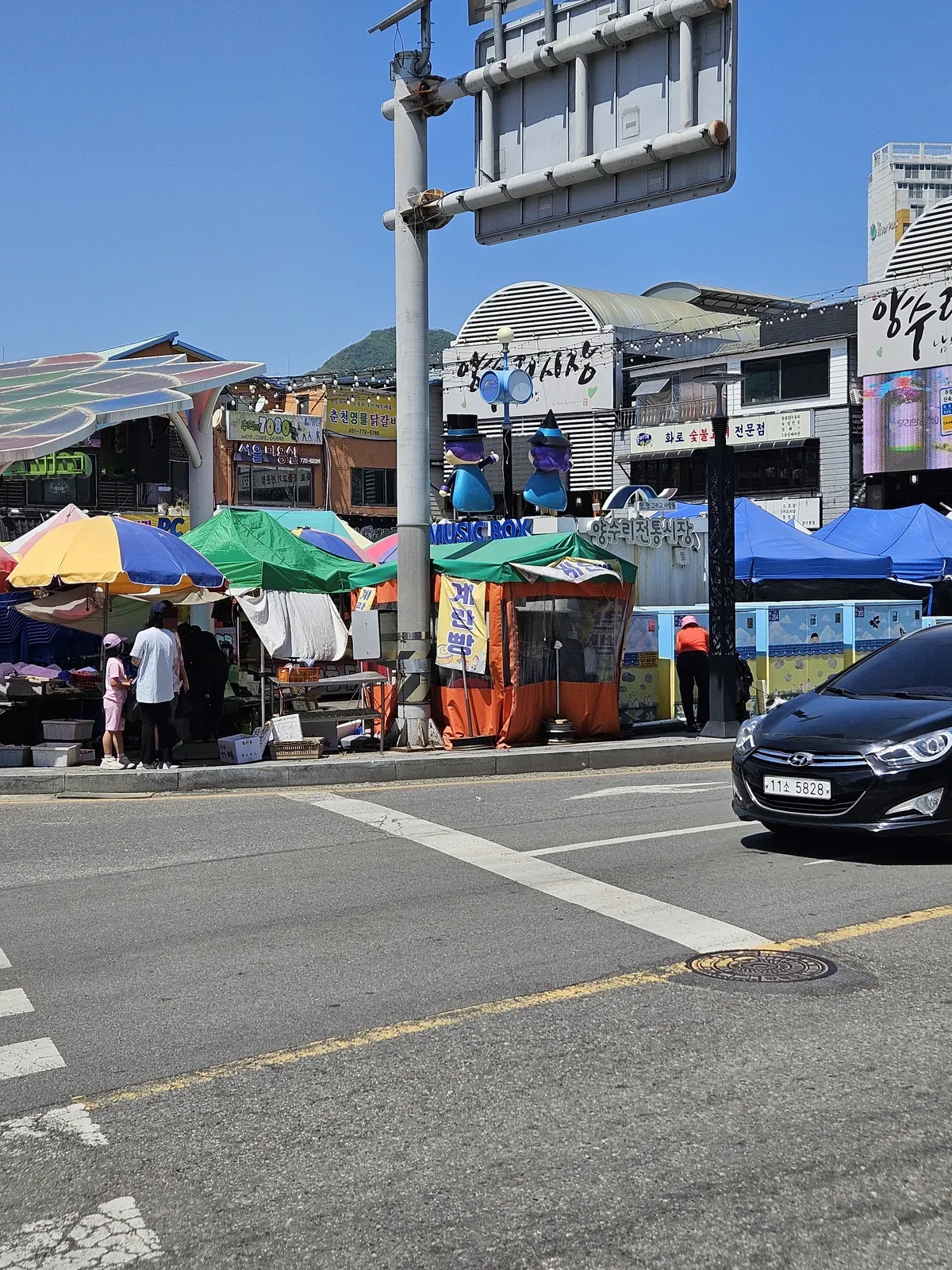
Here’s the tip that actually made my day: before you reach Dumulmeori, check if the Yangsu 5-Day Market (양수리 5일장) is running. It operates on days ending in 4 and 9 (4일, 9일, 14일, 19일 — you get the pattern) and it’s exactly what a proper local market should be.
The smell of braised pork hits you from the entrance, and you can hear rice cakes sizzling on flat pans all the way down the lane. Braised pork knuckle (족발), spicy rice cakes (떡볶이 — chewy rice cakes in chili sauce), hand-rolled kimbap (Korean rice rolls), all at prices that feel almost wrong.
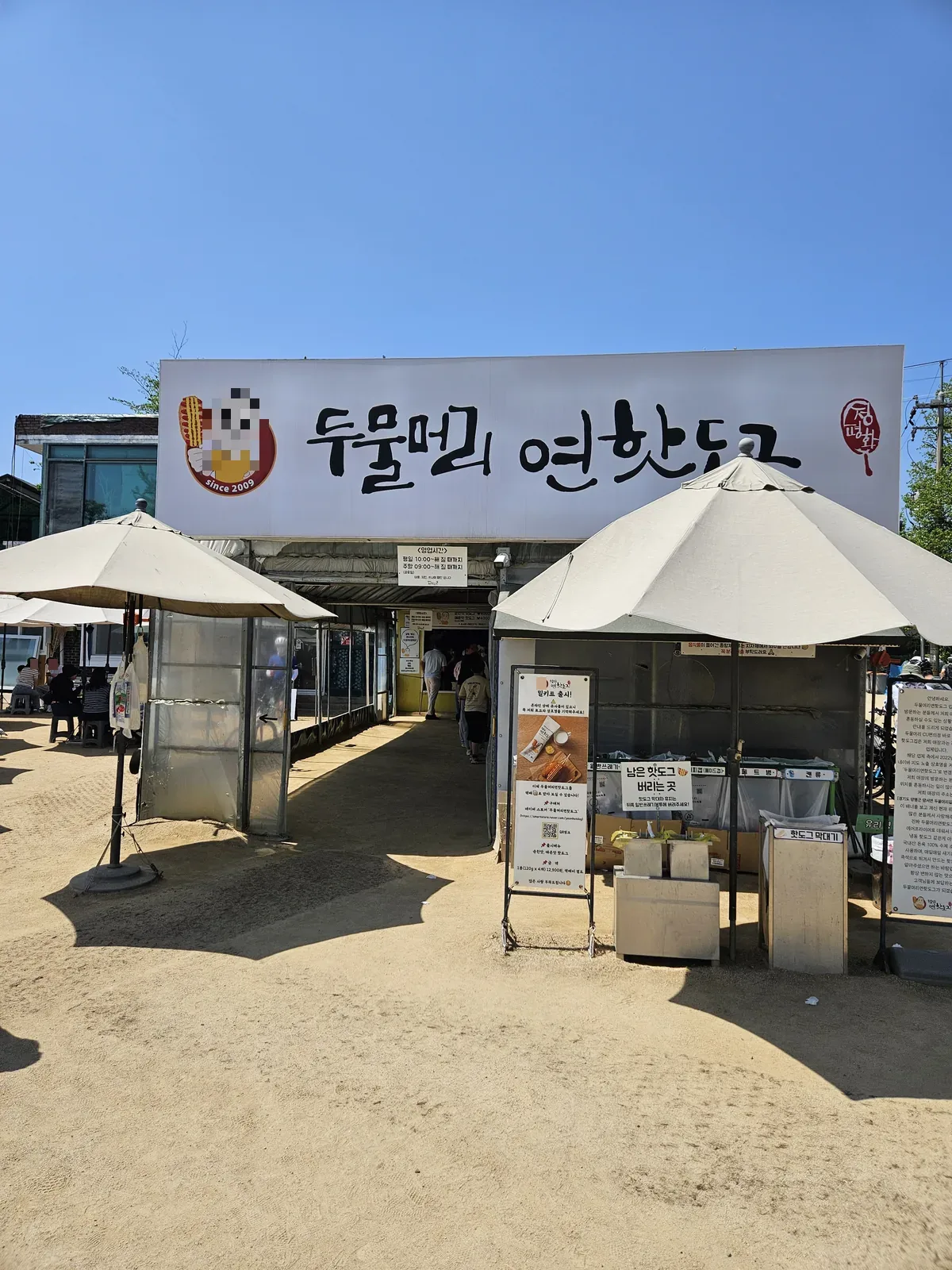
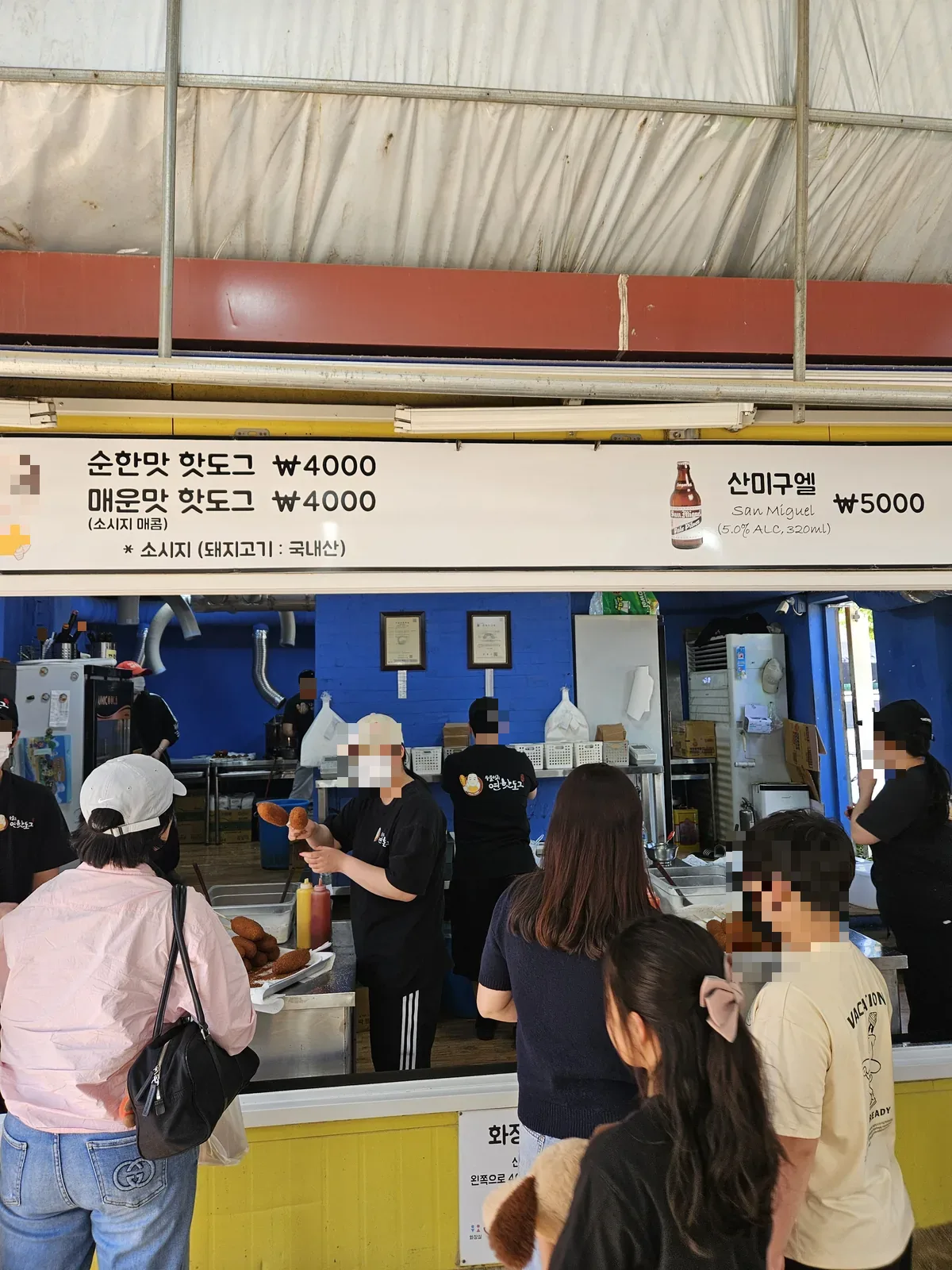
Even if the market isn’t running, there are food stalls right at the Dumulmeori entrance. The one I tried: Yeon Hotdog (연핫도그).
Don’t let the simple stall fool you. The smell of hot oil and sweet batter reaches you a few steps before you even see the menu.
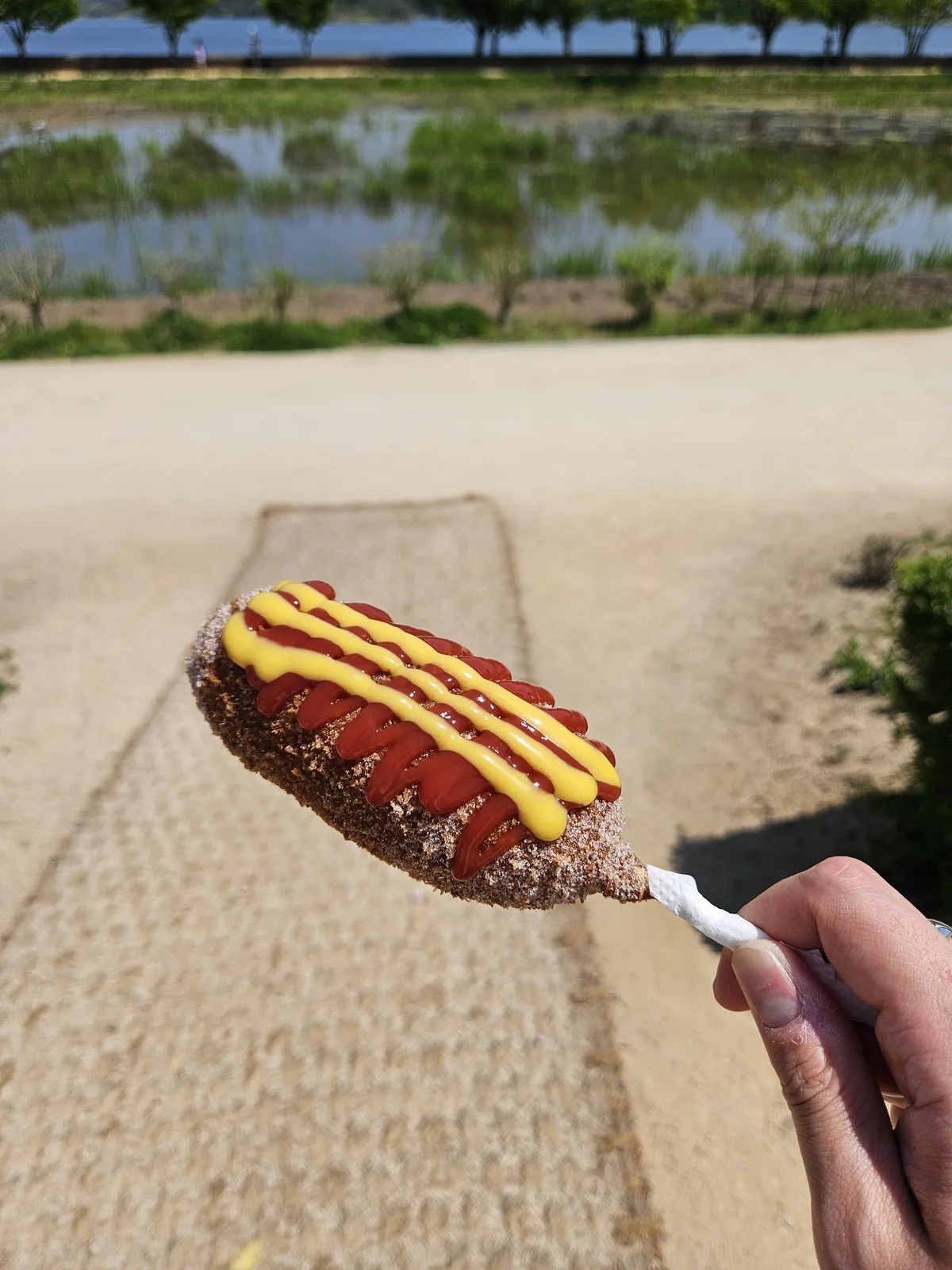
These corn dogs are made with lotus root batter — the coating has a firm, slightly rough crunch and an earthy taste that’s genuinely different from the soft, sweet coating you get everywhere. I got one mild (순한맛) and one spicy (매운맛), both 4,000 KRW (~$3) each.
As shown in my photo of the lotus hotdog, the sausage inside is much bigger than the stall makes it look — my travel companion and I both did a double-take on the first bite. Paired with a cold San Miguel beer (산미구엘, 5,000 KRW), it became one of those accidentally perfect snack moments.
For a full meal, nearby options include Bukhangang Doljjajang (북한강돌짜장) for jjajangmyeon (noodles in black bean sauce) by the river, Daddy’s BBQ (대디스바베큐) which is pet-friendly, and Galbi-yeon (갈비연) for Korean BBQ — also dog-friendly, which is rare and genuinely appreciated if you’re traveling with a pet.
Unforgettable moments
Standing by that ancient willow tree, looking out at where the two rivers meet — there was none of the usual “should I post this?” mental noise. Just me, standing there, feeling genuinely still.
The open view does something to you that’s hard to describe before you’ve actually experienced it. Chest-opening is the closest I can get.
Also the hotdog. Sounds like a small thing, but I wasn’t ready for the sausage to be that generous.
Sometimes it really is the smallest surprises.
And the parking lot situation — not a good memory exactly, but it has become a funny story now. Forty minutes, windows down, same playlist cycling on repeat, moving at walking pace.
Could have been miserable. Somehow wasn’t.
The good
- The view. Wide open river, mountains in the background, absolutely zero hustle to the atmosphere.
- Lotus hotdogs for 4,000 KRW with a sausage that actually fills you up — impossible to complain.
- The 400-year-old willow tree is a real landmark. Not a copy, not a tourist build. Just a very old, very beautiful tree.
- The whole area feels genuinely local. No tourist trap energy, no overpriced “experience packages.”
- Pet-friendly restaurant options nearby, which is harder to find than it should be.
- Flat, easy walking paths — comfortable for any fitness level.
The not-so-good
The parking situation is the real one. Free lots sound great until you’re stuck in a 40-minute exit queue on a Saturday.
If you’re on any kind of schedule, this will genuinely eat into your day.
Weekends get crowded fast — the spot fills up by 10am in good weather. On busy days, you can already hear the crowd noise from the parking lot before you reach the river.
If you want something more quiet and personal, a late-week morning visit is a completely different experience.
English signage around the food stalls and market is basically not there. Most vendors don’t speak English either. Most stalls are also cash-only, so bring small bills — cards are often not accepted.
None of this is a deal-breaker. Just bring a translation app — Papago handles Korean menus better than Google Translate. You’ll be completely fine.
Practical tips
- Best time to visit: Early morning on a weekday. Weekends are doable but arrive before 9am.
- Parking: Free public lots, but budget 30–40 extra minutes to exit on weekend afternoons. No joke.
- By transit: Gyeongui-Jungang Line → Yangsu Station (양수역, Exit 1) → 15-min walk or taxi (~4,000 KRW)
- 5-Day Market: Runs on dates ending in 4 and 9 — check the calendar before you go.
- Lotus season: Late July through mid-August for full bloom — stunning but crowded.
- Total budget: Under 20,000 KRW (~$15 USD) for a full day if you stick to the stalls and market.
- Cash: Bring small bills. Many stalls do not accept cards.
- Translation: Papago app. Download it before you leave Seoul.
- Semiwon Garden: Add 1–2 hours; entry 5,000–7,000 KRW. Worth it in lotus season.
Would I recommend?
Yeah, genuinely. This is the kind of place that doesn’t show up on foreign travel lists because it’s not trying to be on any list.
It’s just a place that Koreans love, have always loved, and keep coming back to. That alone says something.
Go for the view. Stay for the hotdog.
Leave before the parking gets bad.