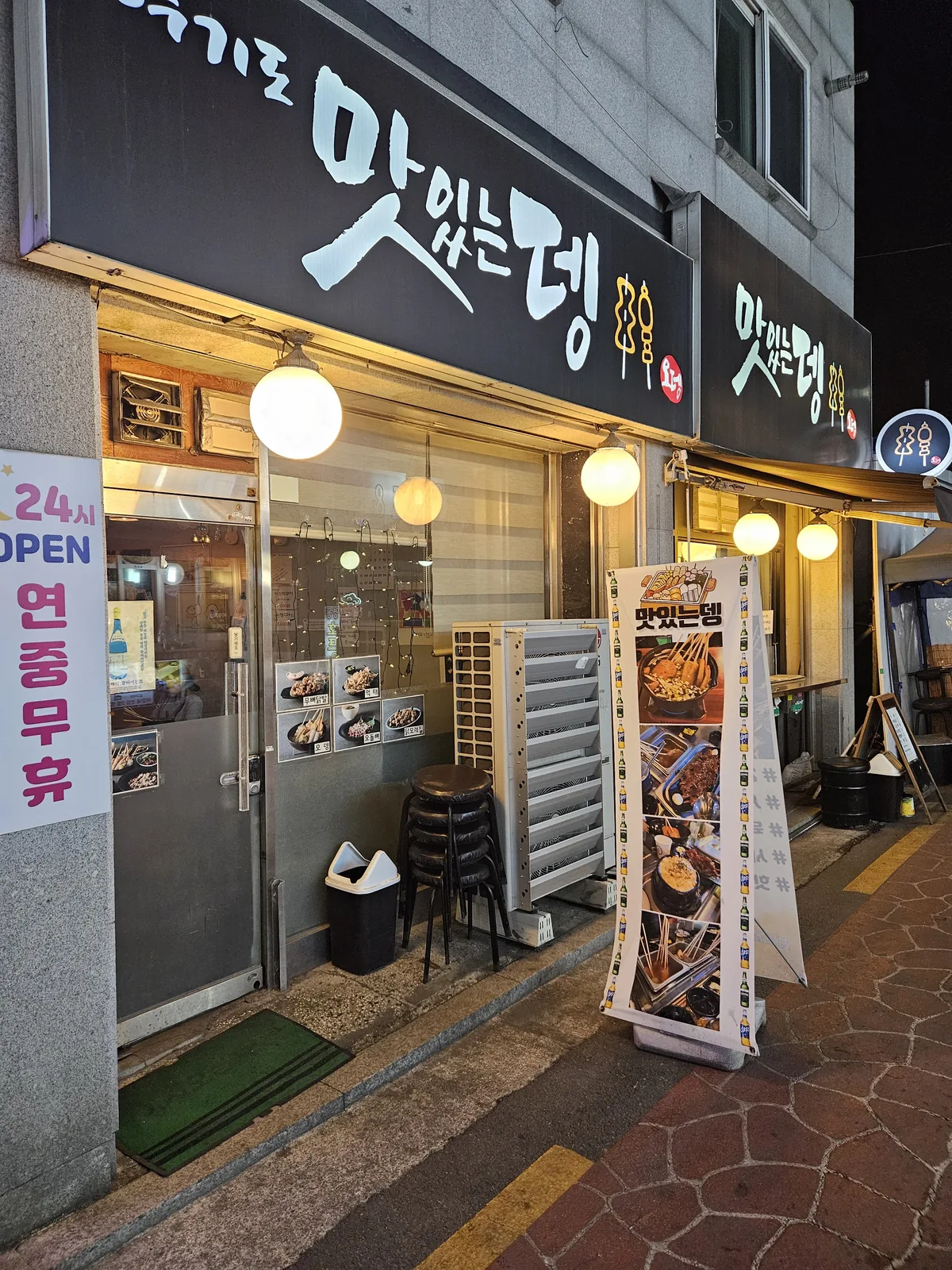
Hi, it’s Solyn. This time we went to Maissneundeng.
There’s a certain kind of bar that never needs to try very hard. No Instagram wall, no trendy light fixtures — just good food, cold beer, and a crowd that found the place the old-fashioned way.
I stumbled into it as a second round after dinner, before anyone had decided whether to keep the night going. I hadn’t planned on making it a habit.
But the broth was good, the beer was cold, and the total came in under 15,000 KRW. So I came back, and kept coming back.
Getting there
Take Line 2 or Line 4 to Sadang Station and come out of Exit 8 — it’s about a five-minute walk from there. This is Sadang, so it’s busy and not built for cars on a weeknight.
There’s no parking at all, which makes the subway the only sensible way in. Don’t drive here; it really isn’t worth it.
The vibe
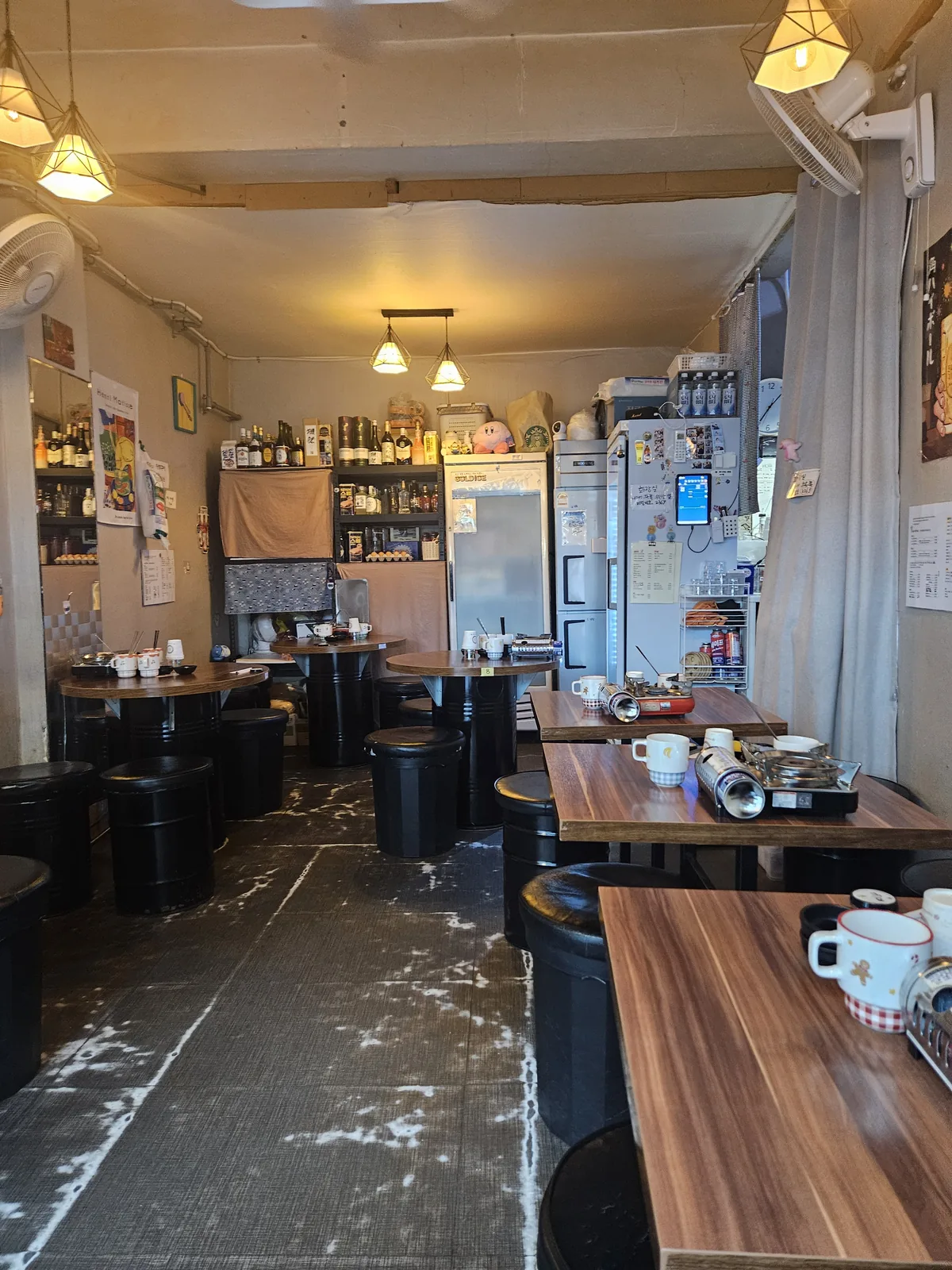
Small. I can’t say it enough — this place is small. Six or seven tables, maybe, in a narrow room where you’re aware of the other tables not because they’re loud but because they’re close.
The tables are repurposed oil drums with wood tops, the stools are simple black barrels, and one wall is lined with bottles and odd little knick-knacks. It reads lived-in rather than designed, and that’s the whole charm.

On busy nights, which is most nights, you’re sharing the room with strangers, and somehow it works completely in its favor. There’s no show, nobody trying to impress anyone.
The crowd skews toward office workers from the Sadang–Isu corridor — people who work nearby and order without looking at the menu. That energy spreads fast, and you relax quicker than you expect.
The closest comparison is a pojangmacha (a traditional Korean street-food tent), but indoors and warmer. Same low-key comfort, same honest feel, with staff who are efficient and direct rather than trying too hard.
What I ordered
The main act here is eomuk — Korean fishcake (oden), the kind simmered on skewers in a big pot of broth. It’s what everyone comes for, and it’s what I order first every time.

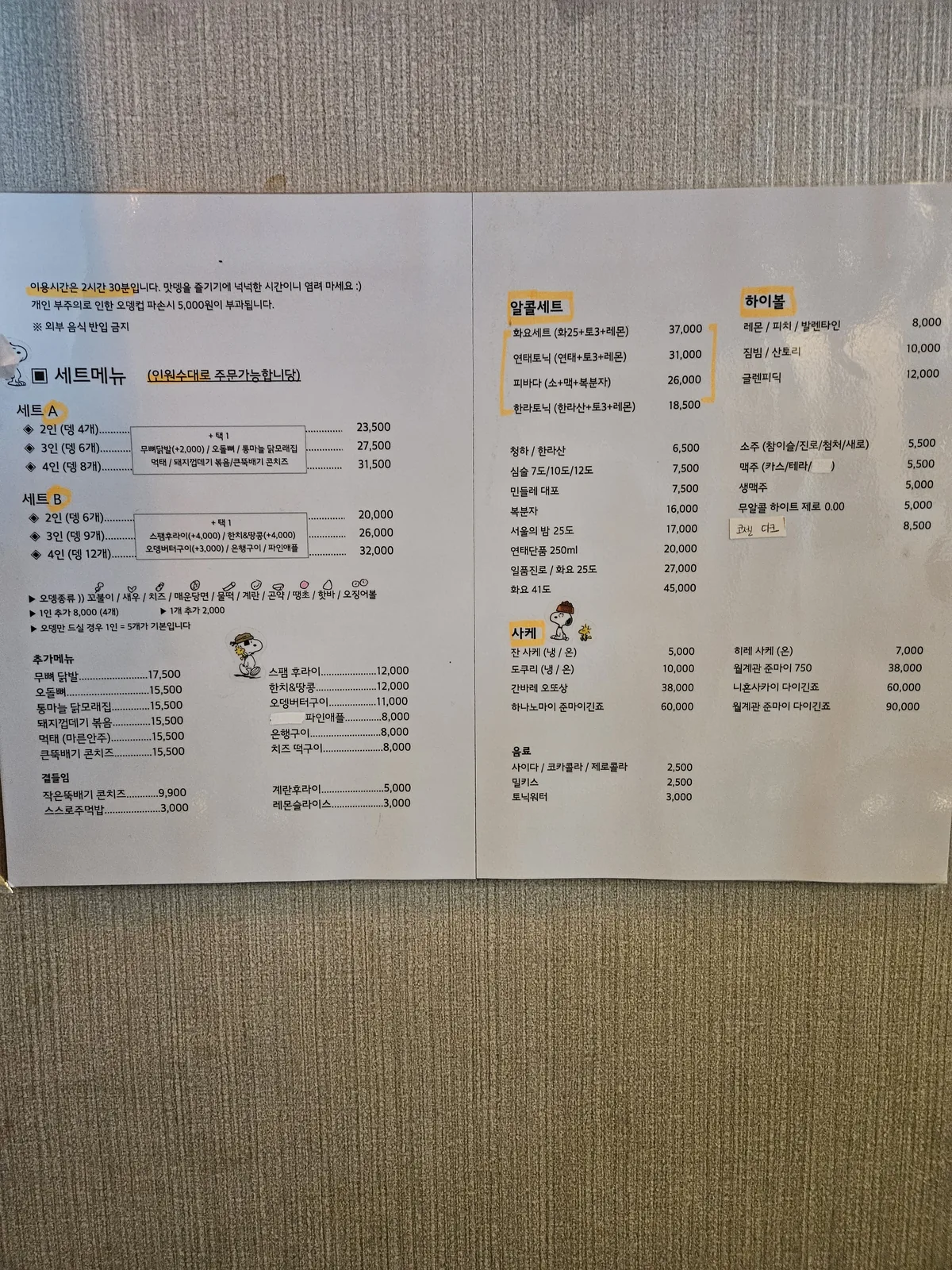
Fishcakes come as sets — one person starts at five skewers, with extra people adding on from there, and single extra skewers running about 2,000 KRW (~$1.50) each. I usually order four or five, sometimes more if I’m staying a while.
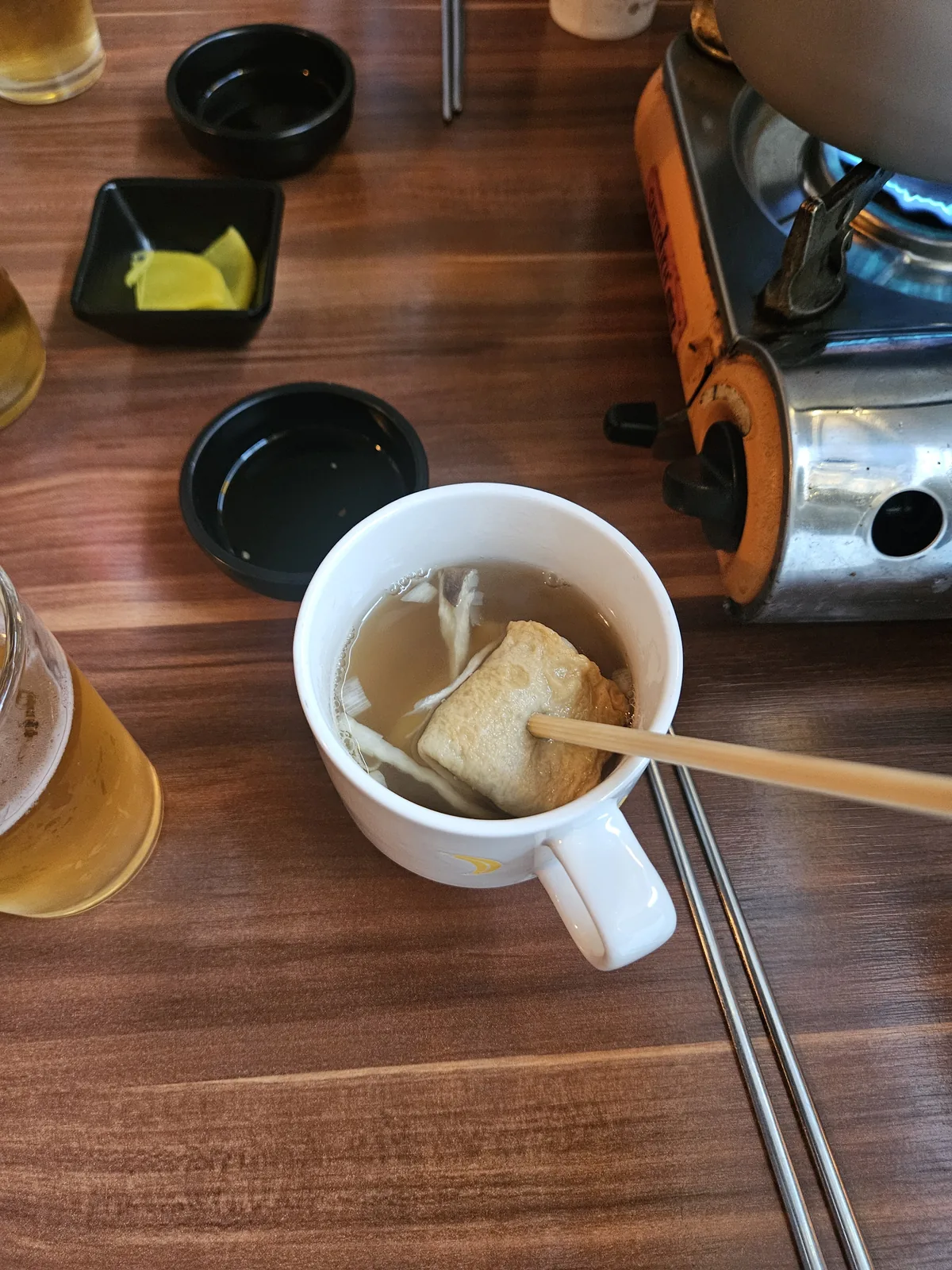
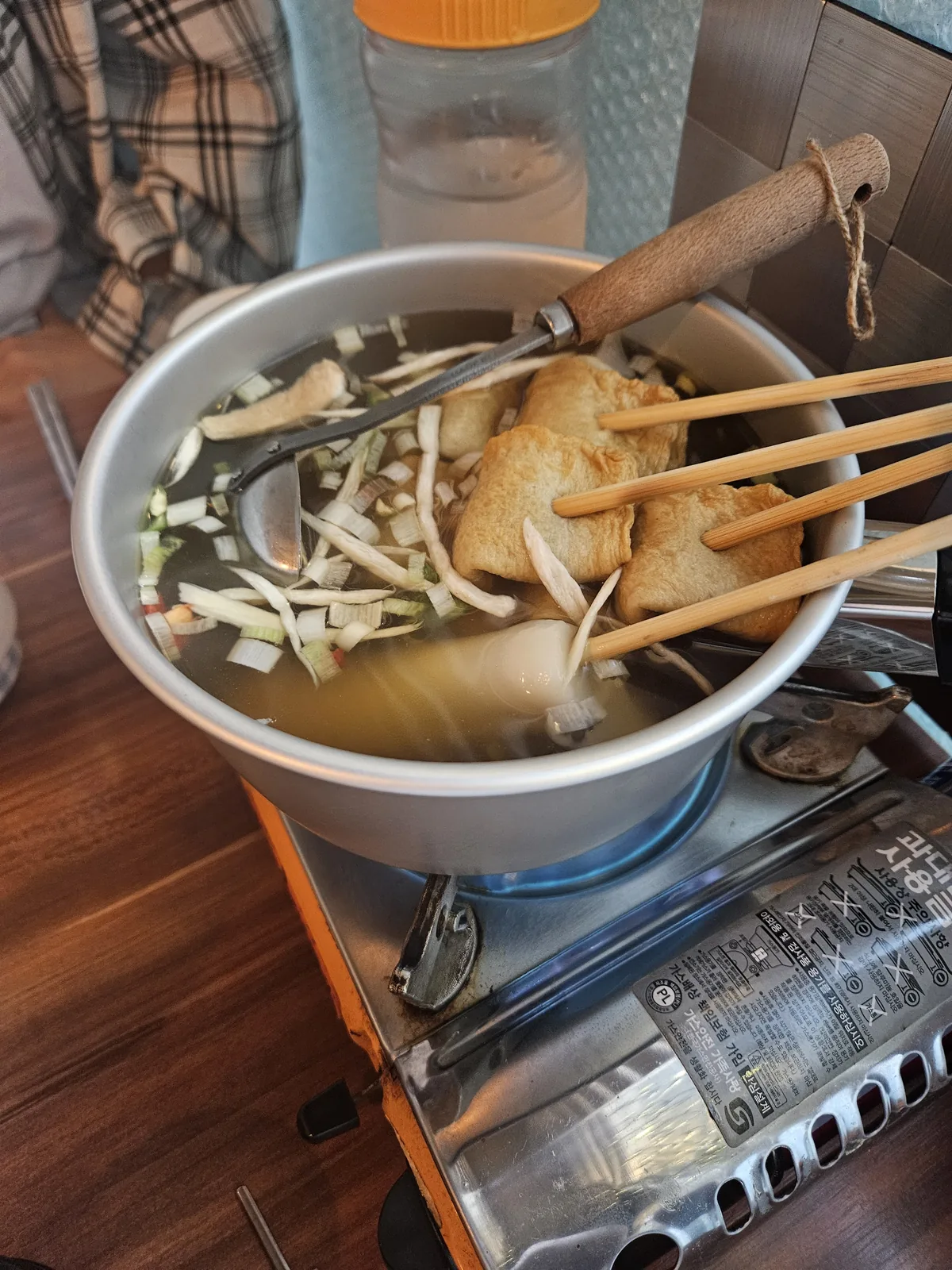
The pot lands at your table on its own little burner, kept at a gentle simmer the whole time — folded fishcake and rice cake bobbing in a clear broth flecked with green onion.

That little burner keeps it bubbling the entire meal, so every skewer you pull is hot straight out of the pot.
The smell hits you before you even sit down — warm dashi (a light Japanese-style stock) with a faint sweetness. That broth, clear and savory and hot enough to feel through the ceramic cup, is what separates this place from a convenience-store snack.
You ladle the broth into your own cup and eat the fishcake straight from it, blowing on each bite between sips of beer.

The broth is free to refill. That sounds like a small thing until you’re forty minutes in and the conversation is actually going somewhere.
The mul-tteok (rice cake skewers in broth) rounds the order out nicely — chewy, slightly springy, with a mild flavor that pairs better with draft beer than something so simple has any right to.
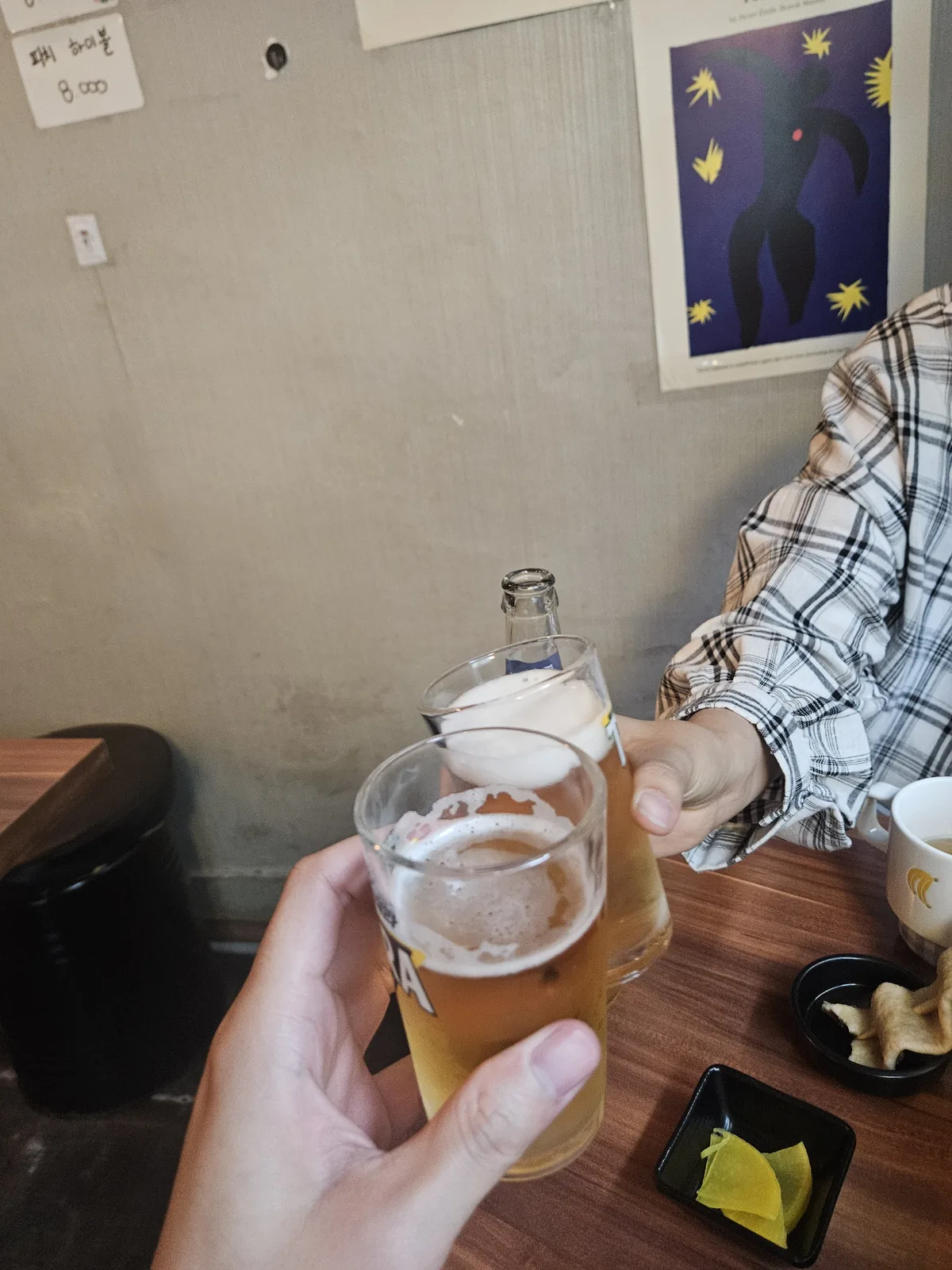
Speaking of which, the draft beer is genuinely good here. I don’t know why it consistently tastes better than at places charging twice as much, but it does — cold, crisp, and fast.

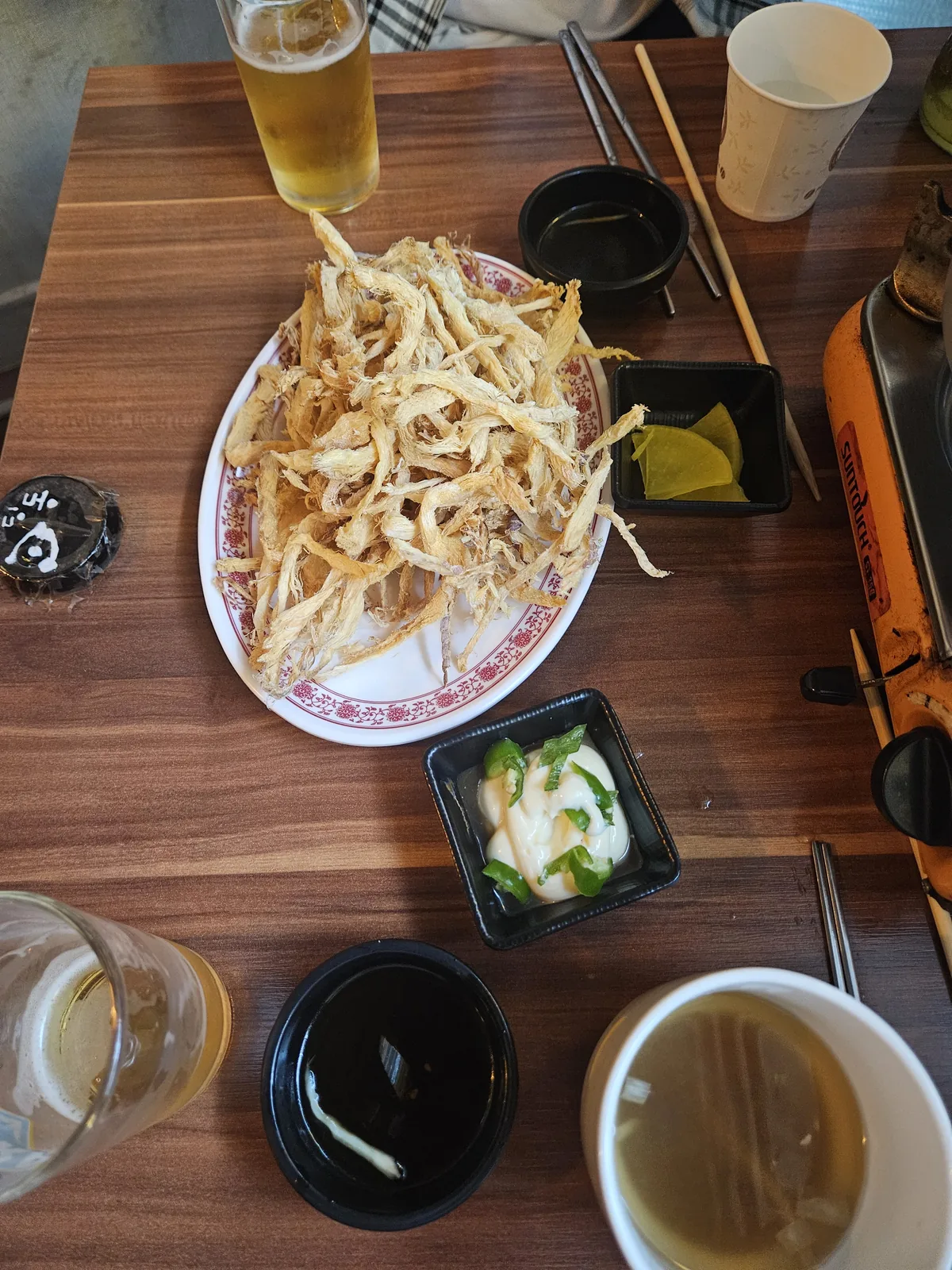
If you want something to pick at between skewers, the meoktae (dried, shredded pollack) is the side to get — chewy, smoky, and just salty enough, served with a mild mayo-and-pepper dip. It’s the definition of a good beer snack.

Four or five skewers plus two beers and you’ve spent around 12,000–14,000 KRW. For quality fishcakes, decent draft beer, unlimited broth, and a seat, nothing else in this neighborhood comes close on value.
The broth refills deserve saying again. It’s part of why the whole thing works — you’re not rushed, you’re not watching the bill climb, you can just sit with a skewer in one hand and a hot cup of broth in front of you and exist for a while.
The hours are another quiet advantage. Open until 1 AM on weekdays and 2 AM on Friday and Saturday, for a sit-down place with real food, is rare — most places this good are closed by 11.
The seating is the main issue. Show up at 8 PM on a Friday expecting to walk straight in and you will wait — I’ve stood outside for close to twenty minutes before a table opened. Arriving before 7 PM is the only reliable way in.
There’s no parking whatsoever, and no English menu — the staff aren’t English-speaking either. The menu is simple enough that pointing works, but it helps to know what you’re pointing at.
And Sundays it’s closed. I learned that one the hard way.
- Hours: Mon–Thu 5:00 PM–1:00 AM, Fri–Sat 5:00 PM–2:00 AM, Sunday closed.
- Getting there: Sadang Station (Line 2 / Line 4), Exit 8, about a five-minute walk. No parking — take the subway.
- When to go: Earlier in the evening if you want a guaranteed seat. After 9 PM it fills up and tends to stay that way, especially midweek; Friday is the busiest.
- Payment: Cards accepted.
- English menu: None, and staff aren’t English-speaking — bring a translation app or a Korean-speaking friend.
- Budget: About 10,000–15,000 KRW per person covers fishcakes, rice cakes, and a beer or two.
Would I come back?
Already have, more times than I’ve tracked, and I’ll keep going. There’s no secret to why it works — it’s cheap, it’s honest, and it’s good.
This neighborhood is full of places competing on style and concept. A spot that just quietly delivers on the basics becomes its own kind of destination.
If you’re anywhere near Sadang or Isu after sundown and want somewhere real, just go here.
— Solyn