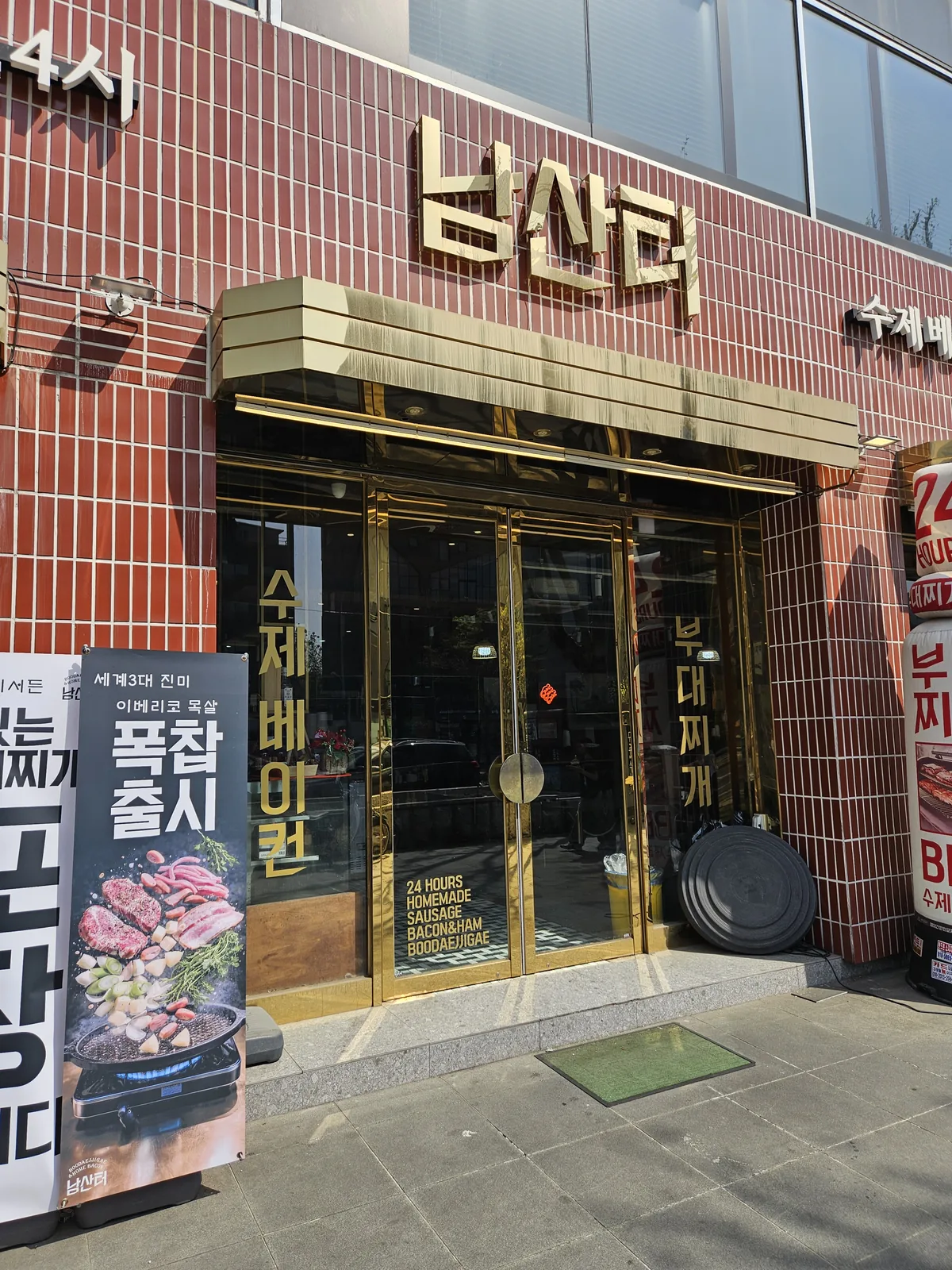
storefront

Hi, it’s Solyn. This time we went to Namsanter.

I walked out of Isu Station Exit 6, turned right, and almost kept walking. Namsanter doesn’t announce itself — no long queue, no neon sign screaming for your attention.

Just a ground-floor space on Dongjak-daero. But as I got closer, the smell of gochujang (Korean red chili paste) and simmering pork fat hit me before I even reached the door.

That kind of smell is all the announcement you need at any hour of the day.


Getting there

Namsanter is a quick walk from Isu Station (Line 4 / Line 7). Take Exit 6, walk straight, and you’re there in under three minutes.

For drivers, there are several public parking lots within easy walking distance — more than you’d expect for a spot this close to a major station interchange. They’re public lots, not attached to the restaurant, so it’s a two-to-three minute walk from your car.


The vibe

Clean. That’s the word. Not trying-too-hard clean, just genuinely well-kept. The interior is bright and spacious enough that you’re not squeezed next to strangers.

The layout feels like it was designed for actual eating rather than Instagram. I caught a glimpse into the kitchen area on the way to the restroom — equally tidy. That kind of thing tells you a lot.

It was a weekday evening when I visited, around dinnertime. Not packed, but occupied — mostly regulars from the looks of it, people who knew what they were ordering without checking the menu.

The staff were quick and efficient without always hovering over the table. Worth knowing: Namsanter is open 24 hours, every single day. Late-night craving on a Tuesday, or lunch before a meeting — you’re covered either way.


What I ordered

I went with the house-made bacon budae jjigae (부대찌개 — Korean army stew made with spam, sausage, and vegetables in a spicy broth) and added a noodle side.

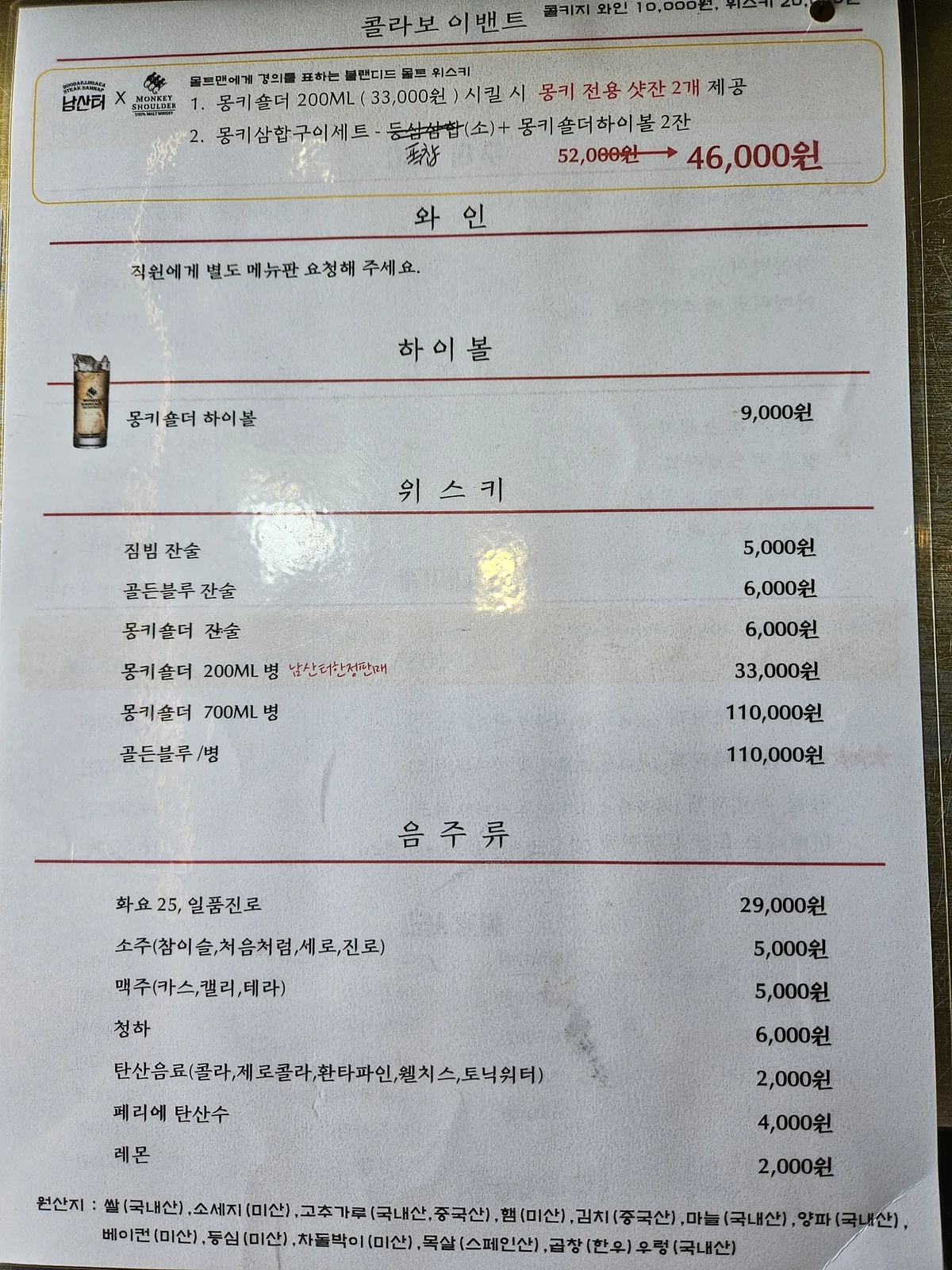
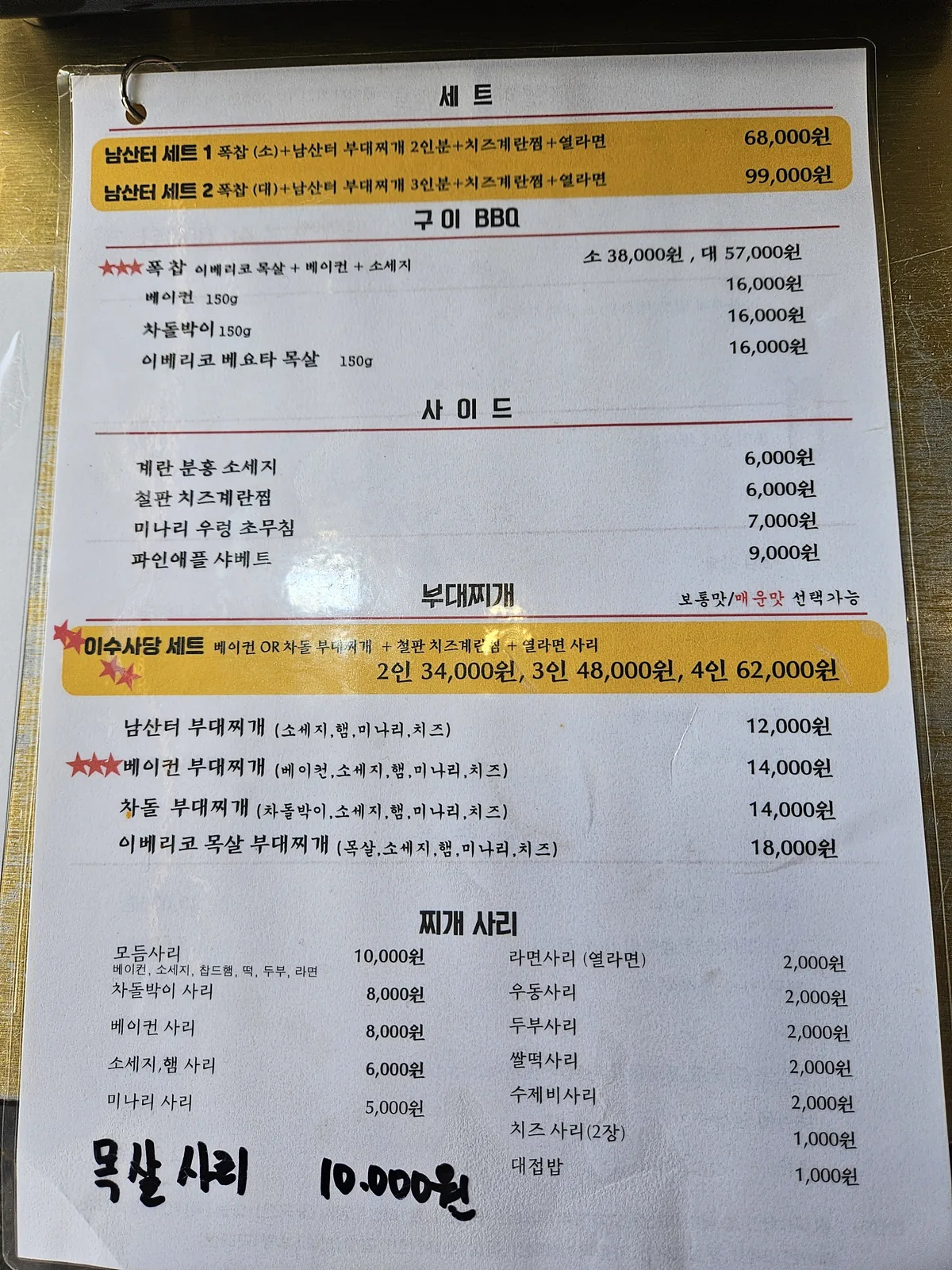
menu
menu

A few reference prices from the menu:

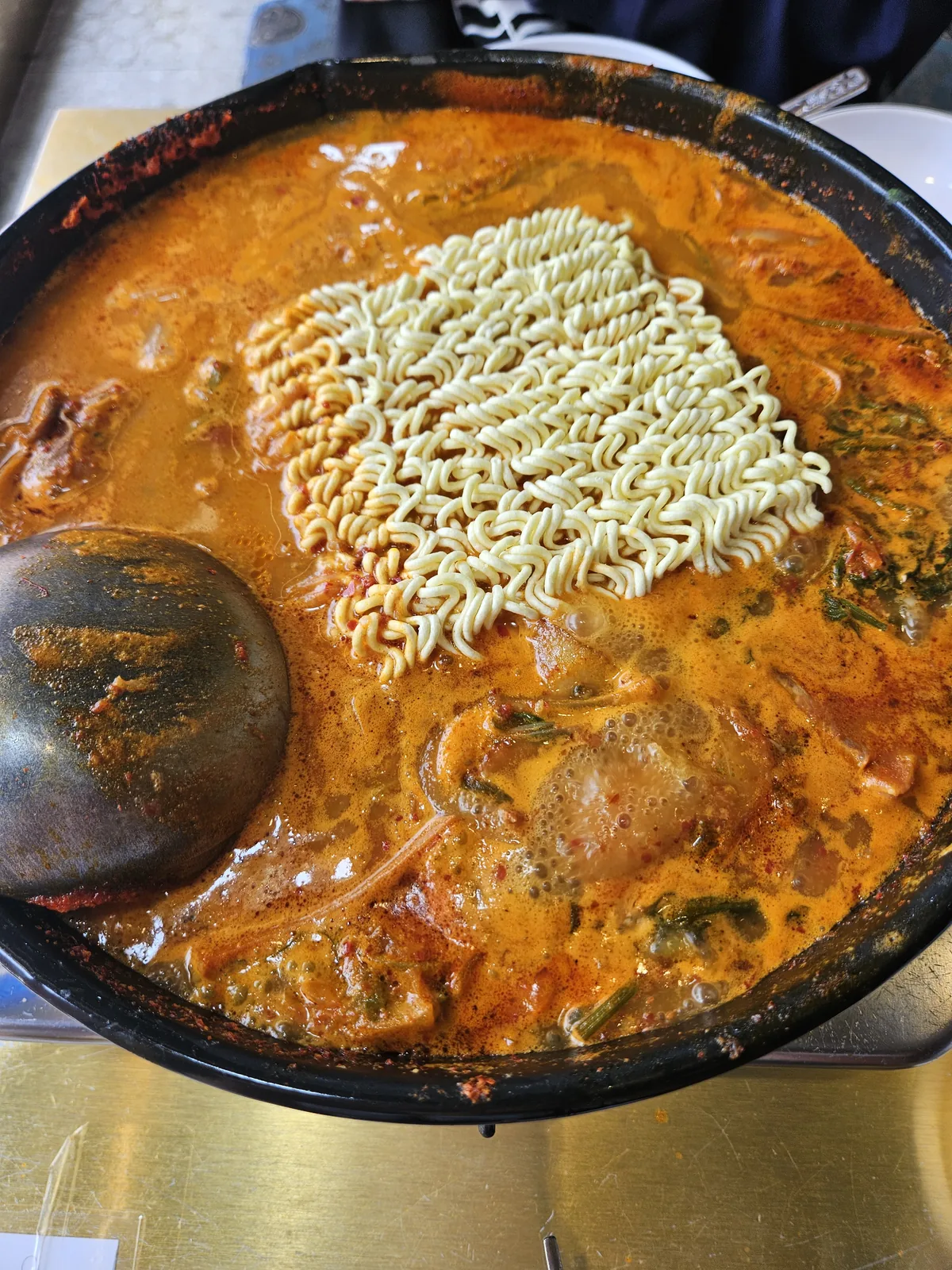
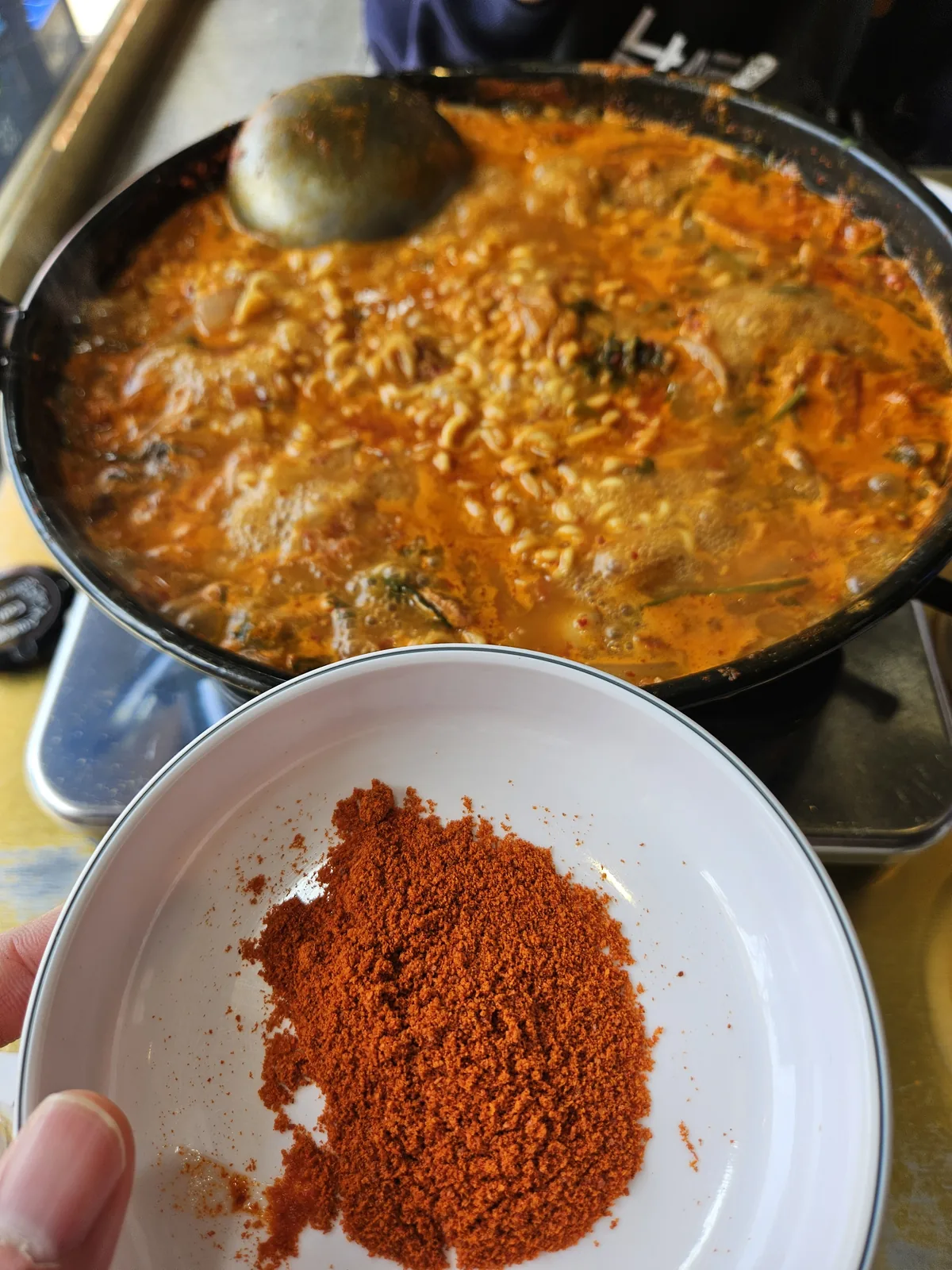
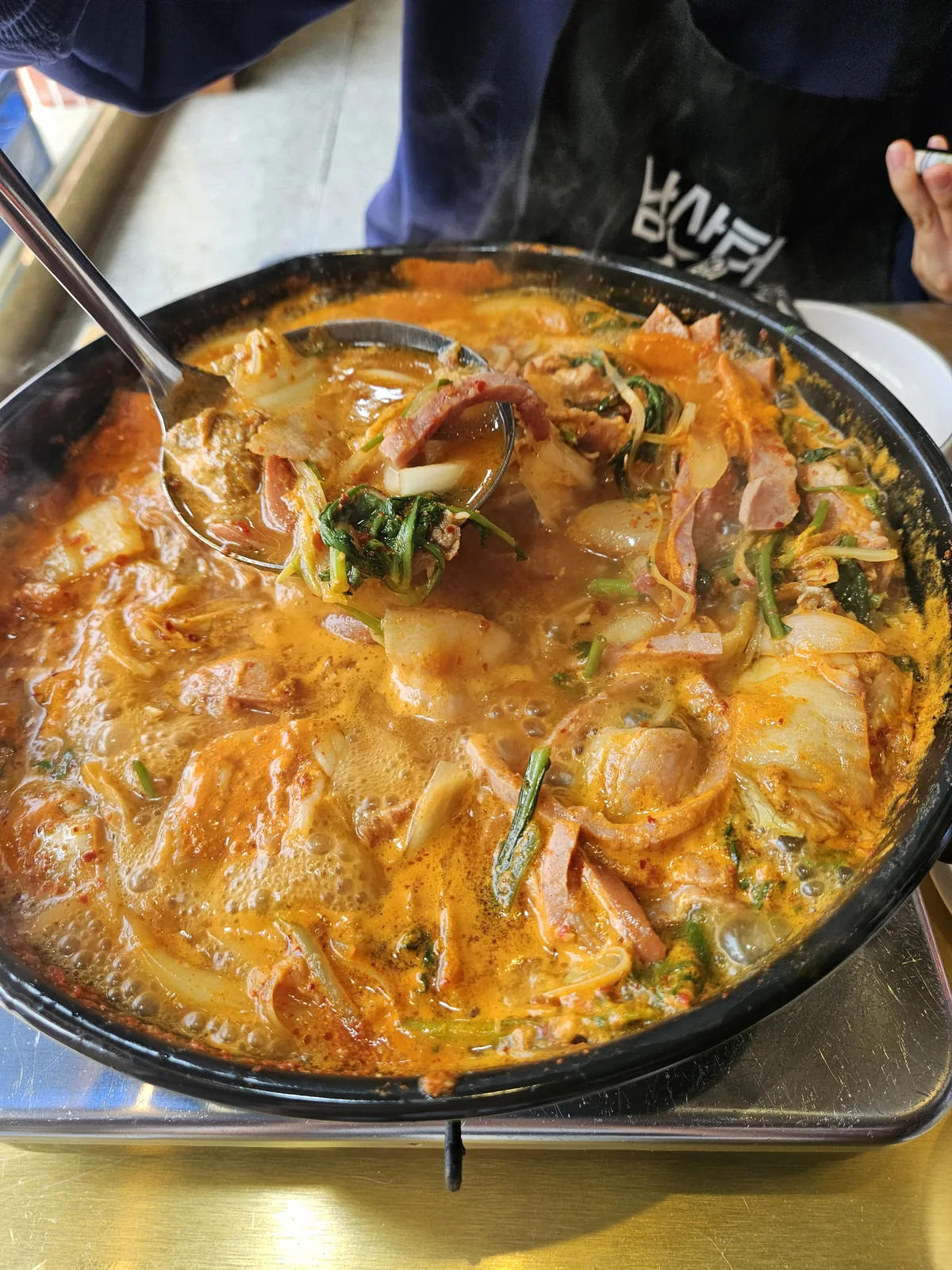
The pot arrives looking calm: a clear broth base with thick-cut bacon, spam, and vegetables all arranged neatly. Then the server puts a small packet of red powder on the table.

dish

That little packet is the hucheom-seupeu (후첨스프 — a post-add seasoning powder you stir in yourself to raise the heat as much as you want), and it changes everything. A few minutes after it goes in, you can hear the broth start to bubble — a low, steady sound that fills the whole table.

The idea is simple: you add as much or as little as you want, so the heat level is yours to decide. I put the whole thing in. By the time the broth was really going, it hit somewhere around the level of a solid tteokbokki (떡볶이 — spicy rice cakes in red chili sauce).

It’s that slow, creeping heat that builds at the back of your throat and somehow makes you eat faster instead of slower. Not “regret this tomorrow” spicy — more like “I can’t stop” spicy.

The house-made bacon is thicker and meatier than what you’d find at most places. It’s firm enough to give real bite — you actually have to chew it, and that’s a good thing.

It holds its shape in the broth instead of falling apart into nothing, with a smokiness that gives the whole pot more depth than the usual army stew.

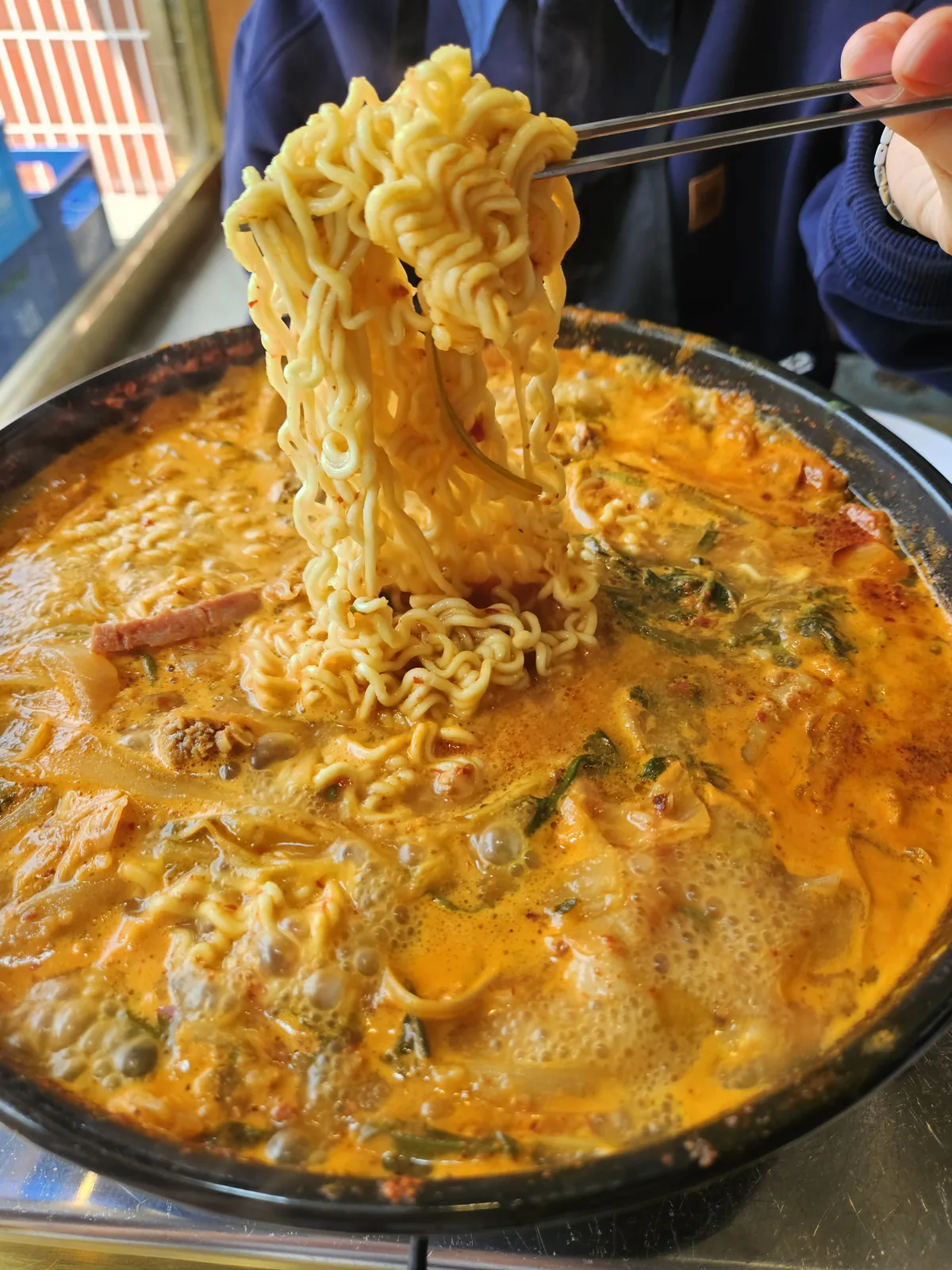
The noodle side was worth ordering. They don’t just throw in pre-boiled noodles — they bring out the whole dry ramen packet, and you add as much of the seasoning as you like alongside it.

dish

I used about half the seasoning packet. The change five minutes makes is real: dry ramen going in, then a full tangle of broth-soaked noodles with a soft, springy chew that held up better than I expected.

dish
👍 The good

The heat system is clever. I’ve eaten budae jjigae with mixed groups before — someone who wants a mild broth, someone who wants to cry a little — and it usually means one person ends up unhappy.

detail

The post-add spice approach means everyone shares the same base flavor, but each person controls their own heat. It’s a small thing that makes the whole experience more personal.

The ingredient quality is clearly higher than average. House-made bacon instead of generic packaged meat makes a real difference in the richness of the broth, and there’s a depth to the flavor you don’t always get.

👀 The not-so-good

The price is a step above the neighborhood average. Not by a lot, but you’ll notice it if you’re used to 9,000 KRW army stew. For the ingredient quality and the setting, I’d still call it fair — just don’t go in expecting a bargain.

There’s no English menu, and the staff aren’t likely to switch to English mid-order. The menu has photos, so pointing-and-nodding gets the job done, but look up the exact ingredients beforehand if that matters to you.

One more thing: weekend evenings get busy. The place fills up faster than the quiet exterior suggests, so on a Friday or Saturday night expect a wait of around 10 to 20 minutes.

Things to know
  • Hours: Open 24 hours, every day. No holidays, no surprise closures.
  • Payment: Cards accepted.
  • English menu: None — the menu has photos, so pointing works fine.
  • Parking: Public lots nearby, a 2–3 minute walk (not attached to the restaurant).
  • Busy times: Weekend evenings; expect a 10–20 minute wait Friday/Saturday nights.

Would I come back?

I was already thinking about it before I finished eating, and that doesn’t happen often with army stew. There’s something about this place that feels thought-out — the house-made bacon, the custom spice system, the broth that actually has layers.

It doesn’t feel like a restaurant that exists just because budae jjigae is popular. It feels like someone put real care into what makes the dish worth eating.

If you’re staying near Isu or Sadang and want one meal that stays with you, Namsanter is an easy choice. Go hungry, use the whole spice packet, and you won’t regret it.

— Solyn