Hi, it’s Solyn. Sadang and Isu are two subway stops in southern Seoul, one apart, and almost no guidebook sends you here. That’s exactly why I eat here.
This is an office-worker neighbourhood. People finish late, come out of the station at 11 PM, and still expect a proper meal — so the food is cheap, the kitchens stay open, and nobody is cooking for tourists. I live nearby, and these are the nine places I actually go back to.
A note before you start: I explain what every dish is, because most of these don’t exist outside Korea and Japan. If you already know what makes a good budae jjigae, skip the explanations — the prices and closing times are the useful part.
How to use this list
The nine places are ordered by how late they stay open, because at 11 PM that’s the only question that matters.
Everything here is a 10–15 minute walk from either Sadang Station (Lines 2 and 4) or Isu / Chongshin University Station (Lines 4 and 7). The two stations are one stop apart, so you can treat the whole area as one neighbourhood.
Cash isn’t necessary. Every place on this list takes cards, including the open-air skewer stand.
Almost nobody speaks English. Menus are usually Korean-only, sometimes with photos. Pointing works fine — this is normal here, and staff are used to it. Each individual review has the dish names written out so you can point at your phone.
The latest closers
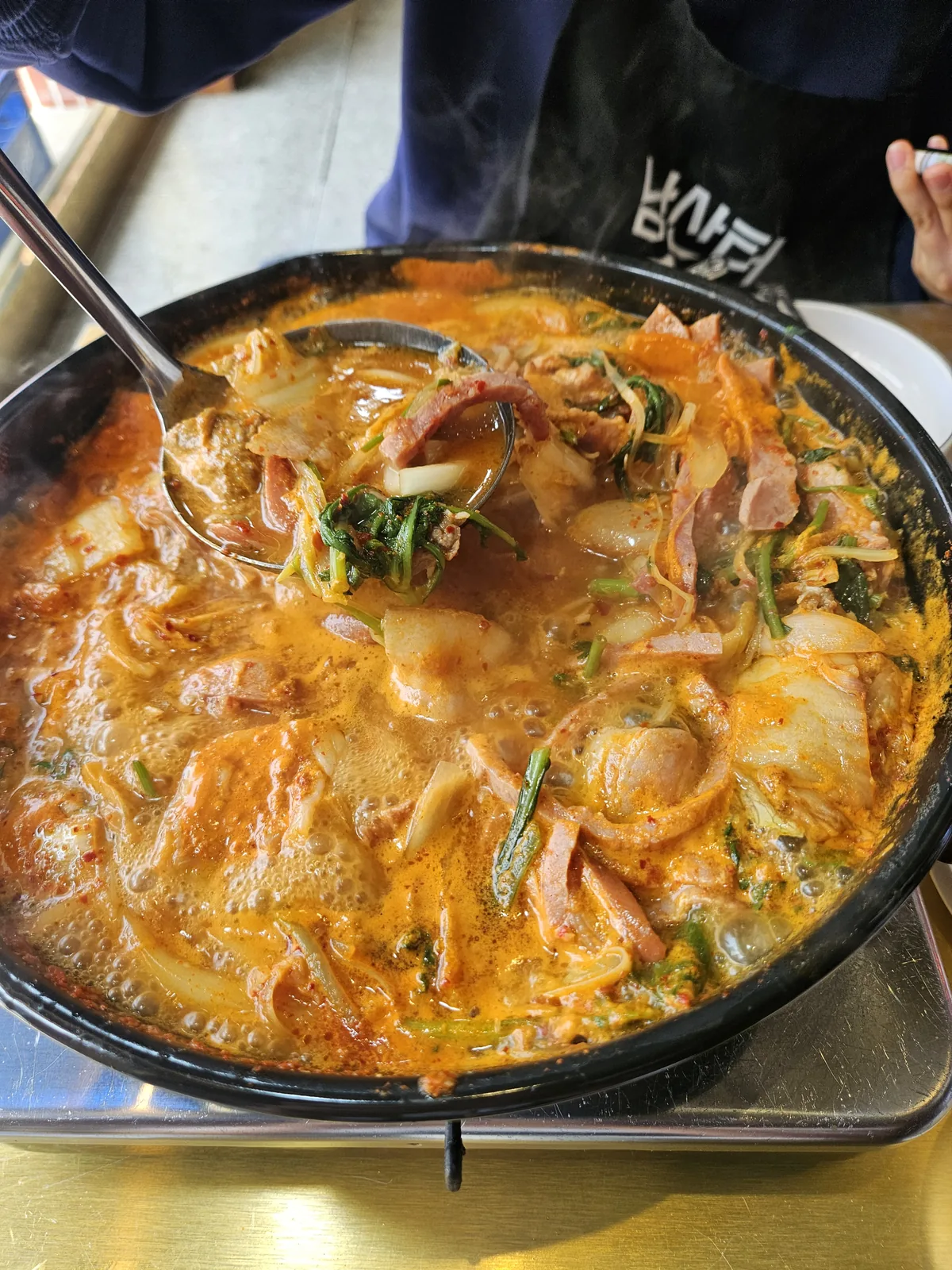
1. Namsanter — budae jjigae, 24 hours a day
Budae jjigae translates as “army stew,” and the name is literal. After the Korean War, food was scarce and the things people could get hold of were American army rations — Spam, hot dogs, processed cheese. Cooks threw them into a Korean spicy broth with kimchi and instant noodles, and the result became a genuinely beloved national dish rather than a curiosity. It arrives as a shallow pan bubbling on a burner at your table, and you eat it as it cooks.
Namsanter’s version is the one that made me stop treating budae jjigae as drunk food. The broth is built rather than dumped, and the house-made bacon is a real upgrade over the usual sliced ham.

Open 24 hours, every day, no holidays. ₩12,000–14,000 per person (~$9–11).
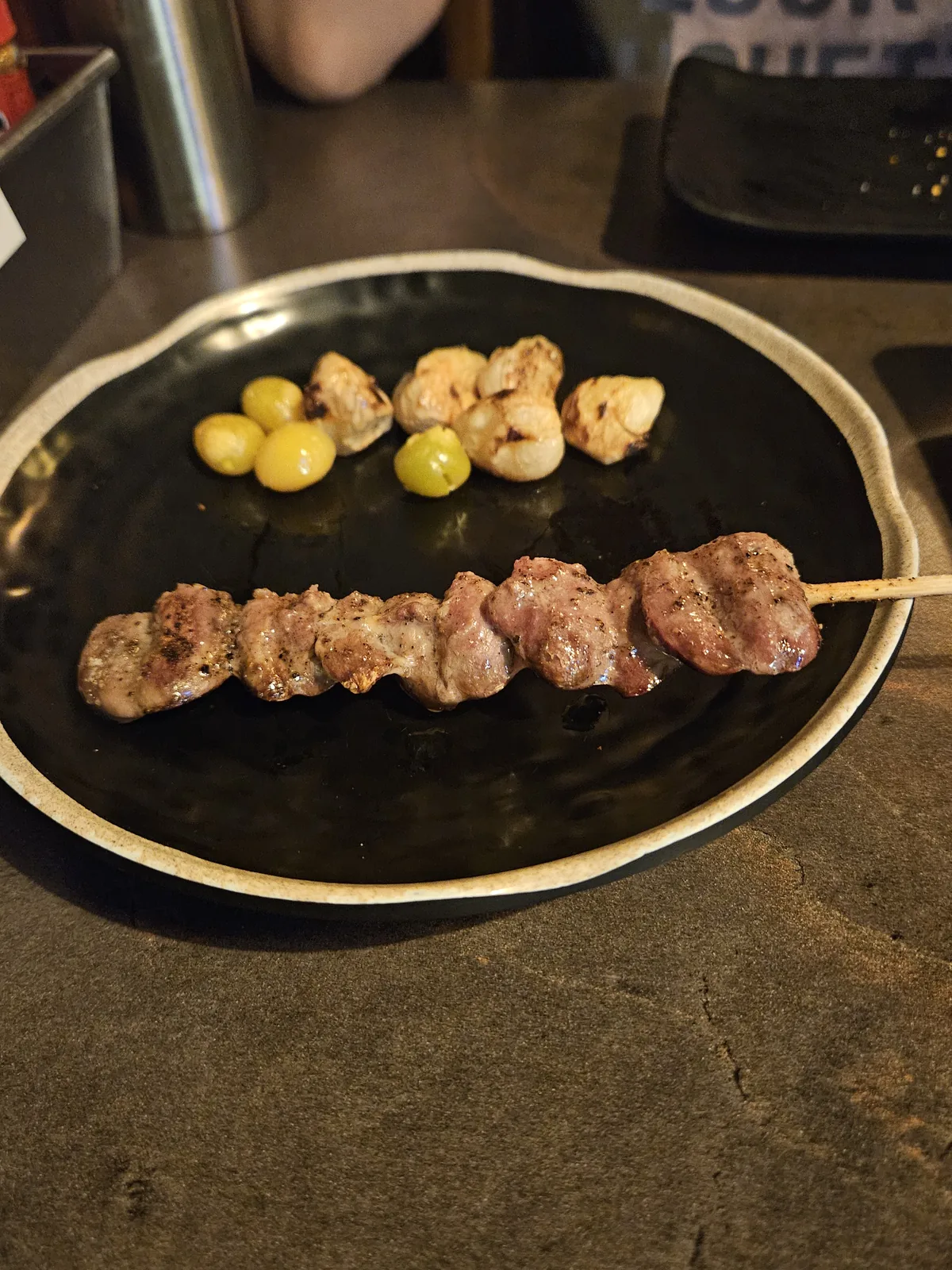
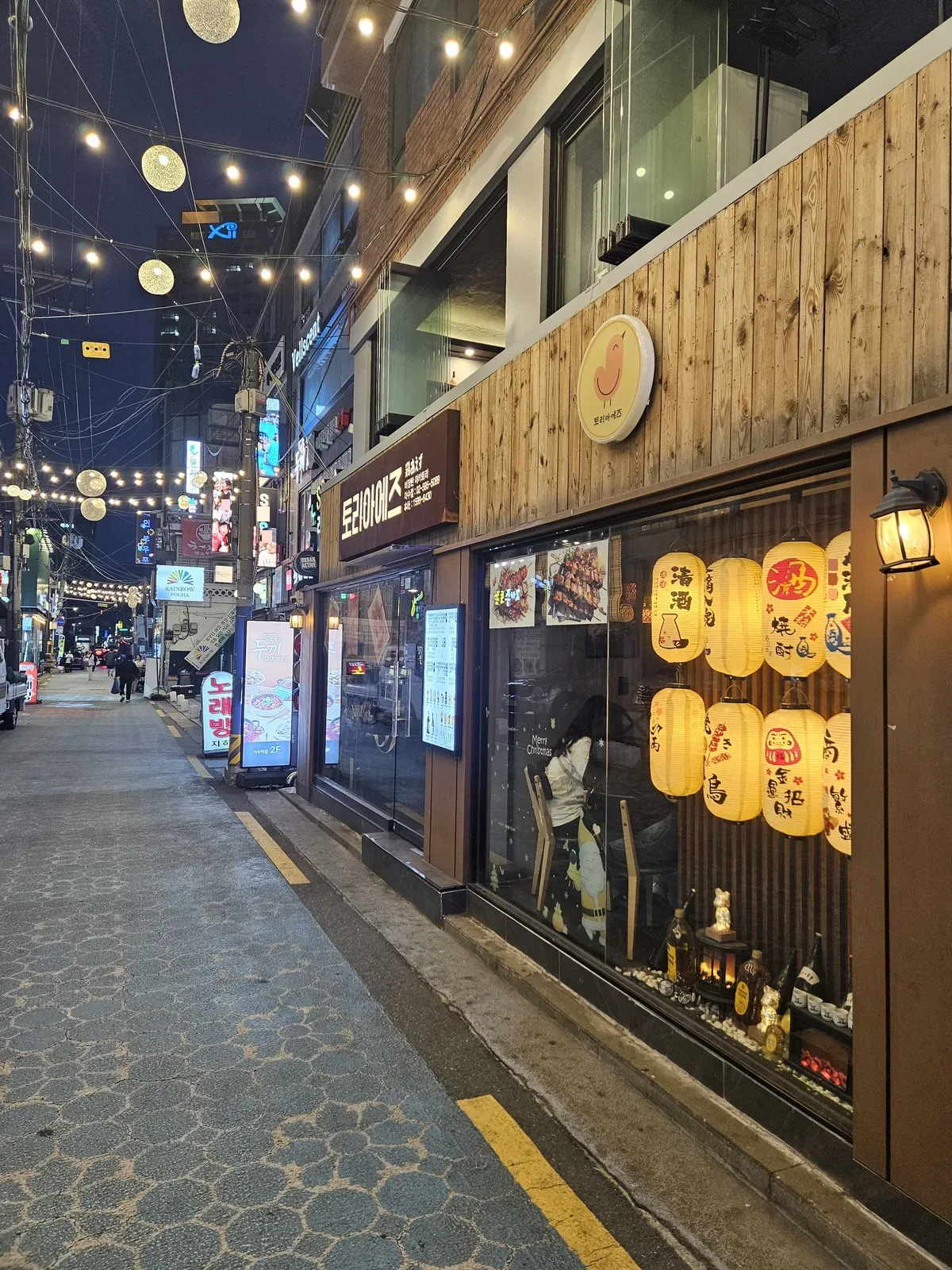
2. Toriaez — Japanese yakitori until 4 AM on Friday and Saturday
Yakitori is Japanese chicken grilled on skewers — but “chicken skewers” undersells it, because each cut is treated as its own thing. Thigh, skin, heart, and cartilage all come separately, each seasoned and timed differently. Toriaez grills over binchotan, a dense white Japanese charcoal that burns very hot with almost no smoke, so the outside sears before the inside dries out.
Skewers start at about ₩1,500 (~$1.10), which is why this is my standard second stop. It’s a counter, it’s fine to come alone, and the draft beer is properly cold.

Daily from 4:30 PM. Sun–Thu until 1 AM, Fri–Sat until 4 AM (last order an hour before). Roughly ₩20,000 per person (~$15) with a couple of drinks.
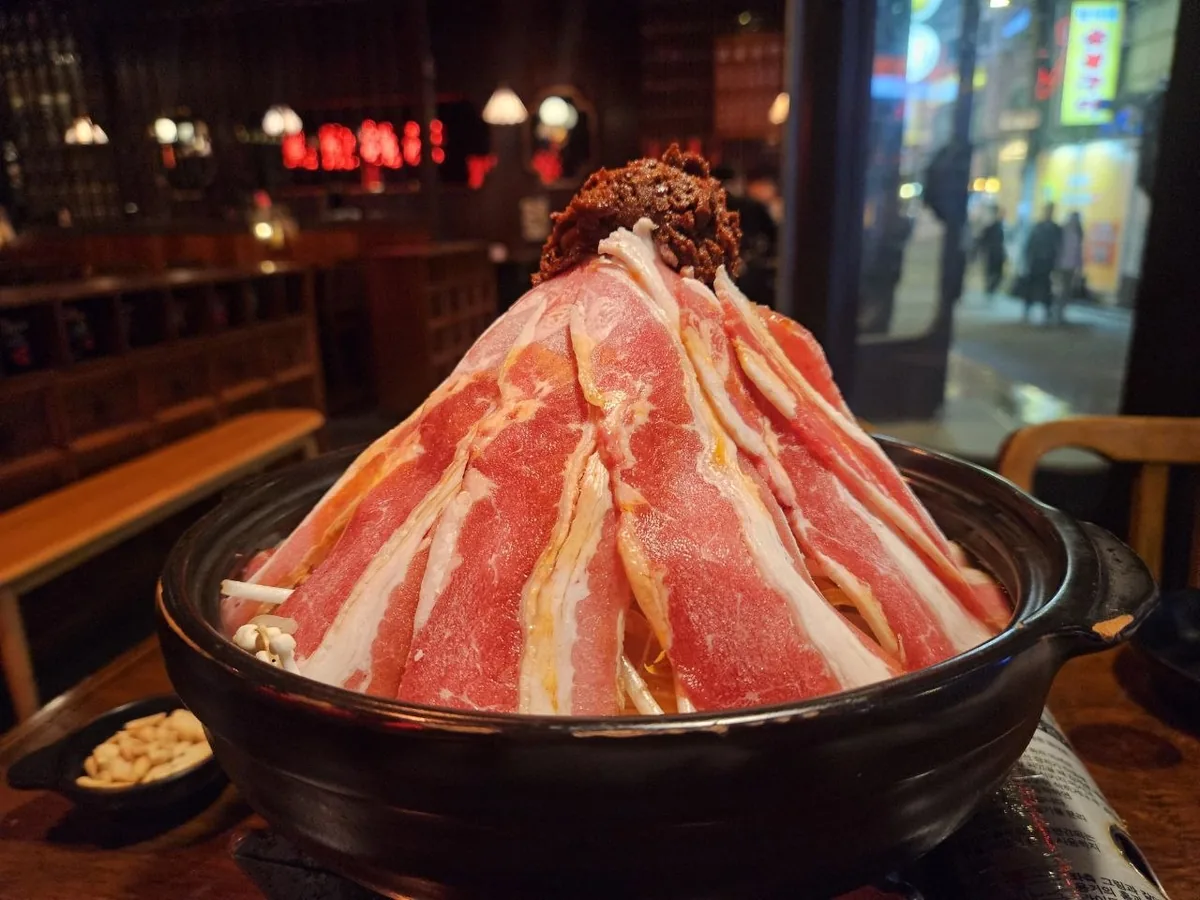
3. Golmokjip — grilled beef offal until 2 AM on Friday and Saturday
Gopchang is beef offal, grilled. Three cuts share the plate: gopchang (small intestine), daechang (large intestine, the fatty one) and makchang (the last chamber of the stomach, chewy). It arrives already grilled, so there is no standing over a fire wondering whether it is done — eat it the moment it lands.
Two things make this one worth the walk. The soft tofu stew they bring before the meat is free and unlimited — ask for more, nobody minds. And there are two floors, so if the ground floor is packed, take the stairs.
Be warned: offal splits opinion among Koreans too, and this is not the place for a quiet dinner. If you have never tried it, start with makchang or daechang rather than gopchang.
Daily from 11 AM. Sun–Mon to 11 PM, Tue–Thu to midnight, Fri–Sat until 2 AM. Mixed platter 26,000 KRW per person (~$19).
4. Yongyong Seonsaeng — malatang until 2–3 AM
Malatang is the one worth explaining properly, because “spicy Chinese soup” gets it wrong. Má means numbing and là means hot — two separate sensations. The numbness comes from Sichuan peppercorn and is a genuine physical tingle on your lips and tongue, closer to a mild electric buzz than to heat. The chilli heat sits underneath it. If you’ve never had it, the numbness is surprising, and it is supposed to be there.
You build it yourself: take a bowl to the fridge, load it with whatever you want — noodles, tofu skin, mushrooms, greens, meat, fish cake — and hand it over to be weighed and cooked. You pay by weight.
Most malatang in Seoul is sharp and almost sour. Yongyong Seonsaeng goes the Hong Kong route instead: deep and savoury first, heat second. It’s the version that changed my mind about the dish.

Open until 2 AM on weekdays, 3 AM on Friday and Saturday. ₩25,000–35,000 per person (~$18–25) with drinks.
→ Full review of Yongyong Seonsaeng
Open past midnight (most nights)
5. Maissneundeng — a fishcake bar until 1–2 AM
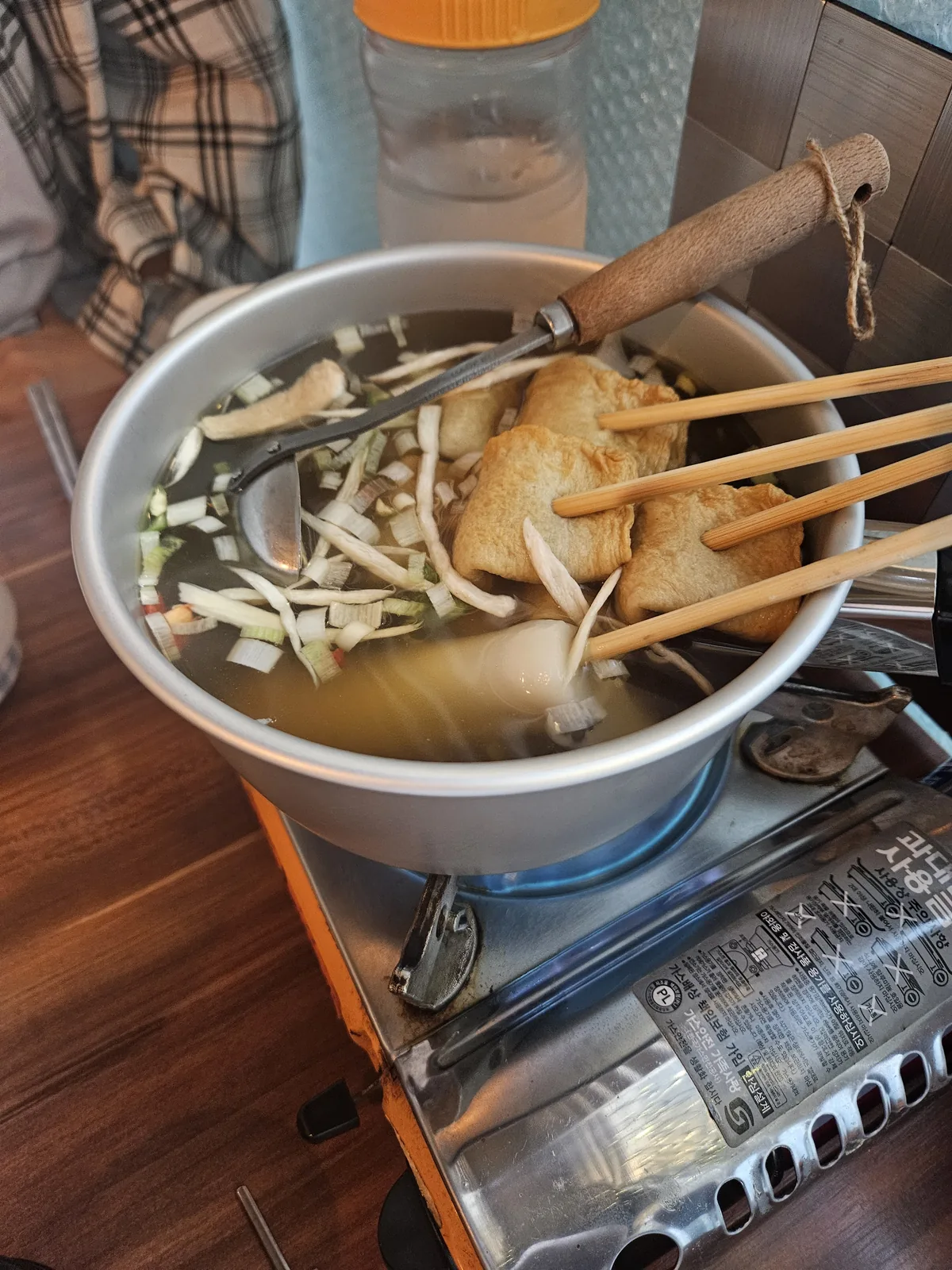
Eomuk (also called odeng) is Korean fish cake: white fish blended into a paste, formed into sheets, then folded onto skewers and simmered in a big pot of anchovy-and-kelp broth. It’s the classic Korean street food, and the broth is free and refillable — you help yourself with a paper cup while you wait.
At a sit-down bar like this one you also get mul-tteok, a chewy rice cake on a skewer soaked in the same broth. Order it. It’s the whole reason to sit down rather than eat standing at a street cart.
This is the cheapest way to keep a night going, and it’s the one I recommend to people who say they can’t handle spicy food.

Mon–Thu until 1 AM, Fri–Sat until 2 AM. Closed Sunday. ₩10,000–15,000 per person (~$7–11).
→ Full review of Maissneundeng
6. Yajupocha — charcoal-grilled roe octopus until midnight–1 AM
Two words to unpack here.
A pocha (short for pojangmacha) was originally a street tent with plastic sheeting, a few tables, and food built for drinking. Most are now indoor restaurants that keep the same idea: loud, cheap-ish, seafood-heavy, and open late.
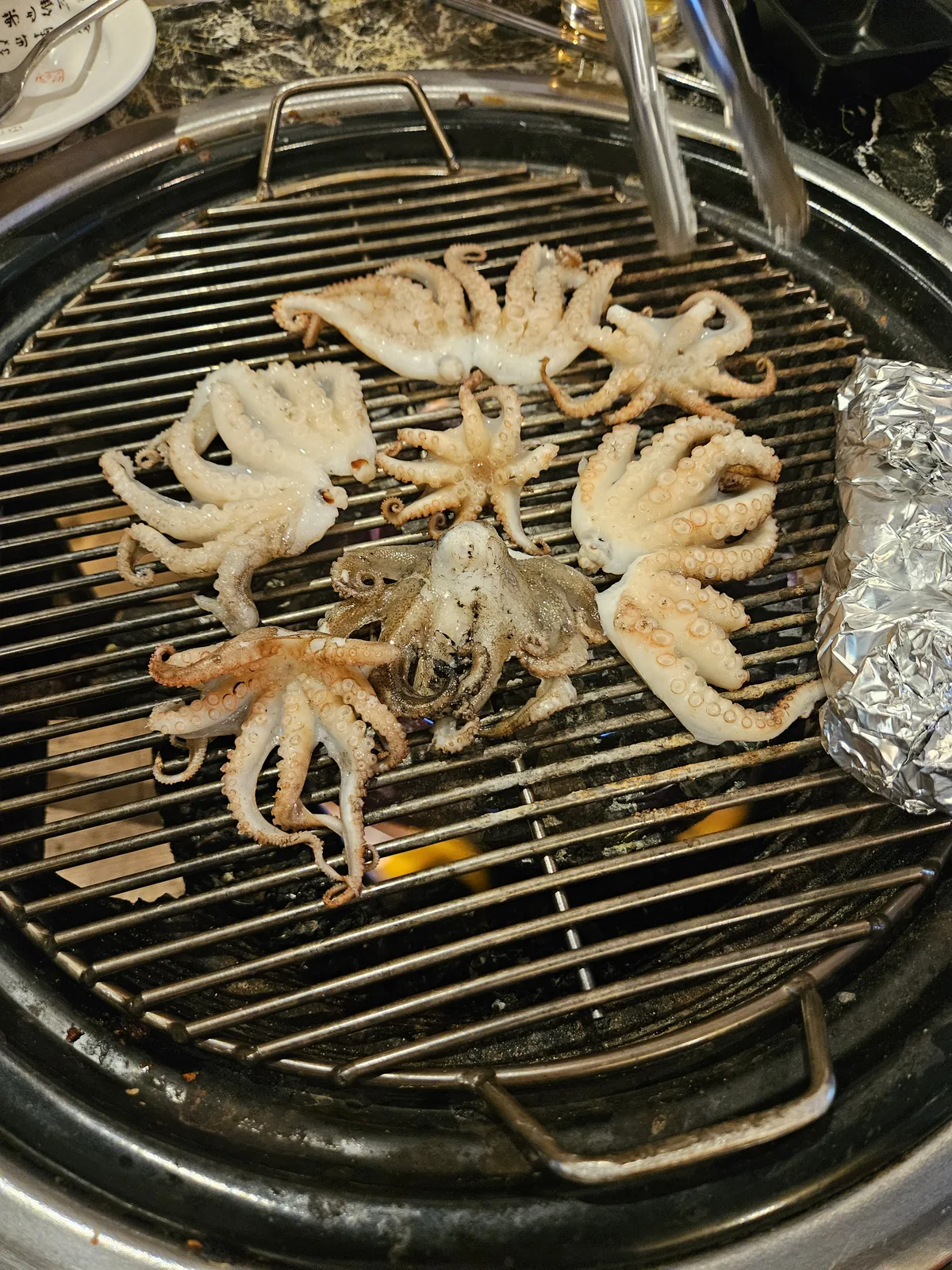
Roe octopus is jukkumi, the webfoot octopus — small, about the size of your palm — caught in spring when the female’s head is full of eggs. Cooked whole over charcoal, the head splits to a mass of tiny eggs with a texture somewhere between soft-boiled egg yolk and rice. It is a seasonal delicacy in Korea and genuinely unlike anything else on this list.
This is the most expensive place here and the least beginner-friendly. It’s also the one I’d take a visiting friend to.

Mon–Thu until midnight, Fri–Sat until 1 AM. Closed Sunday. The octopus is ₩50,000 (~$37); two people with drinks lands around ₩100,000–130,000 (~$75–95).
7. Apgujeong Dakgochi — open-air chicken skewers, a second-stop place
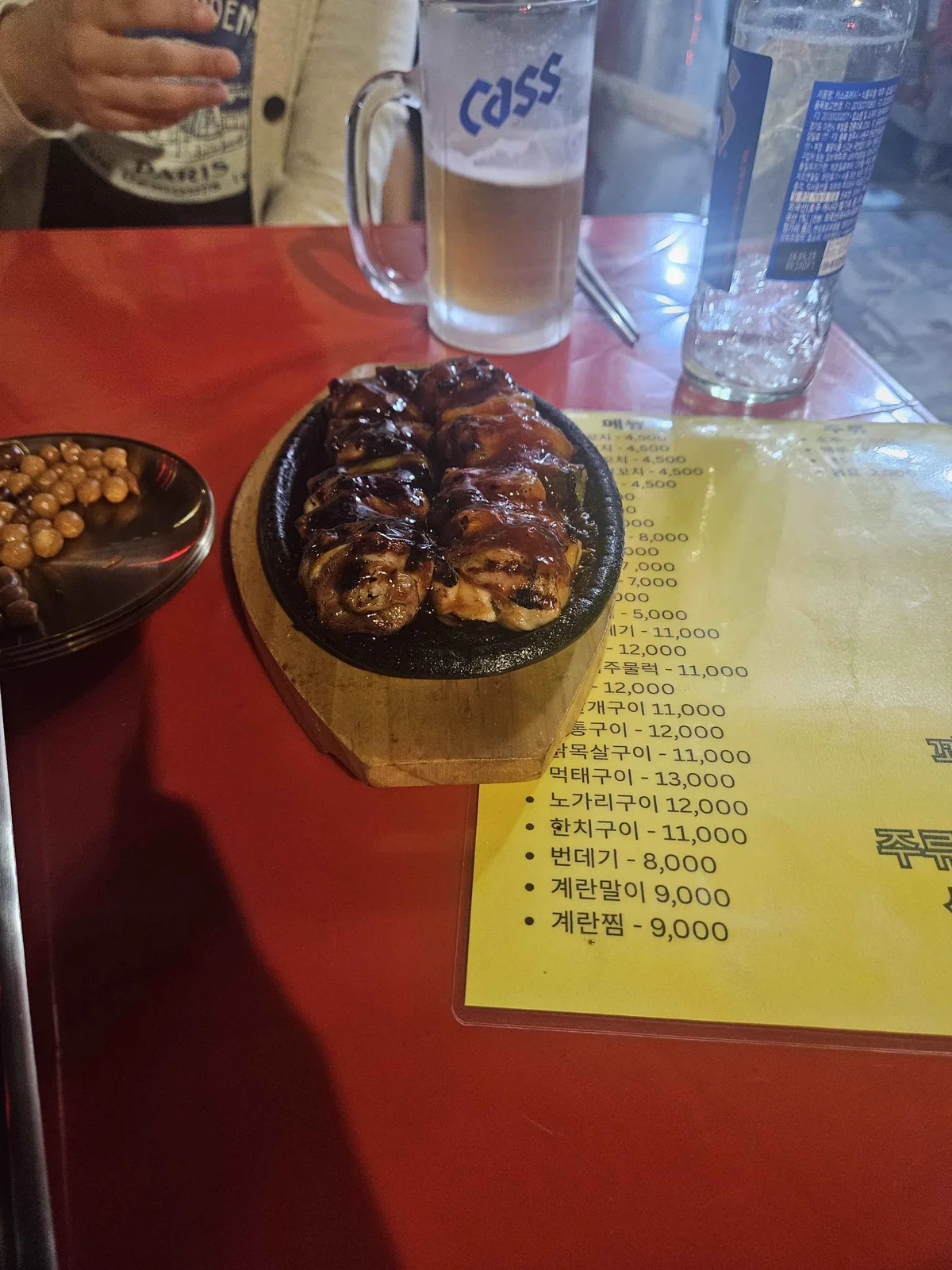
Dakgochi is the Korean take on a chicken skewer: chunks of thigh and spring onion, grilled, then brushed with a sweet-and-spicy red sauce. Simpler and sweeter than Japanese yakitori, and eaten standing up as often as sitting down.
This one is an open-air joint that has been in the same spot for twenty years and looks it, in the best way. It’s not a destination dinner — it’s where you stop on the way somewhere else, eat three skewers, and carry on.

A late-night stop — best after 8–9 PM. Skewers ₩4,500 each (~$3.30); ₩10,000–15,000 per person (~$7–11).
→ Full review of Apgujeong Dakgochi
Dinner, not late night
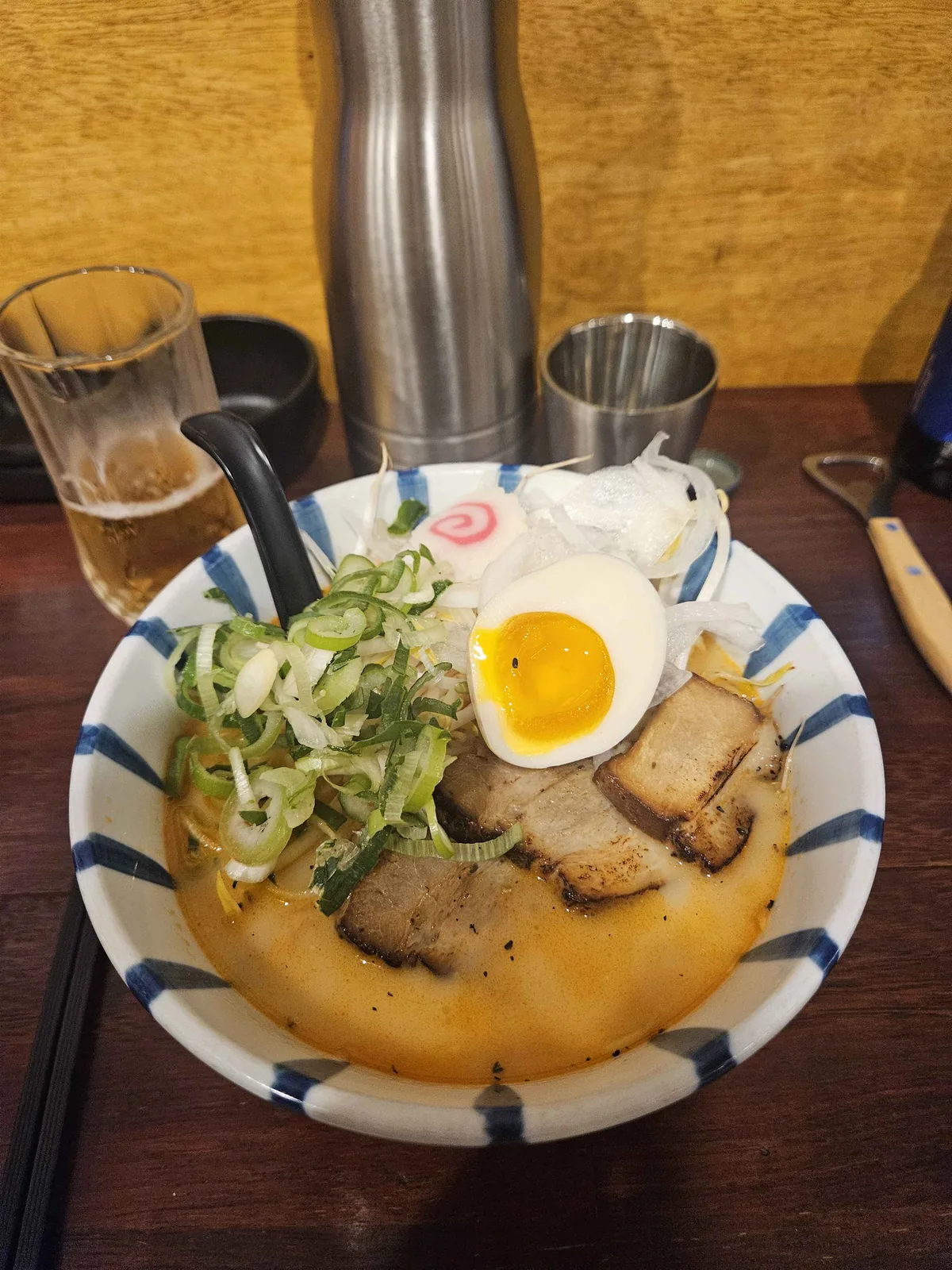
8. Hoshi Ramen — closes at 9 PM
I’m putting this here so you don’t waste a trip: Hoshi Ramen shuts at 9 PM. It’s on this list because it’s the best bowl in the neighbourhood, not because you can eat it at midnight.
Tonkotsu is Japanese ramen built on pork bones simmered for hours until the broth turns opaque and almost creamy — rich in a way that stock alone never gets. Hoshi does a proper one, and the rice and side dishes are free, which is unusual.
Go at 7 PM on a weekday when you didn’t manage to eat dinner. That’s what it’s for.

Tue–Fri 11:30 AM–9 PM, Sat 12–9 PM. Closed Sunday and Monday. ₩10,000–15,000 per person (~$7–11).
One stop away
9. Saemgol — charcoal makchang in Bangbae
Being honest: Bangbae isn’t Sadang or Isu. It’s one stop up the line, about ten minutes on the subway. I’m including it because it’s the best thing I’ve eaten near here and it would be strange to leave it out.
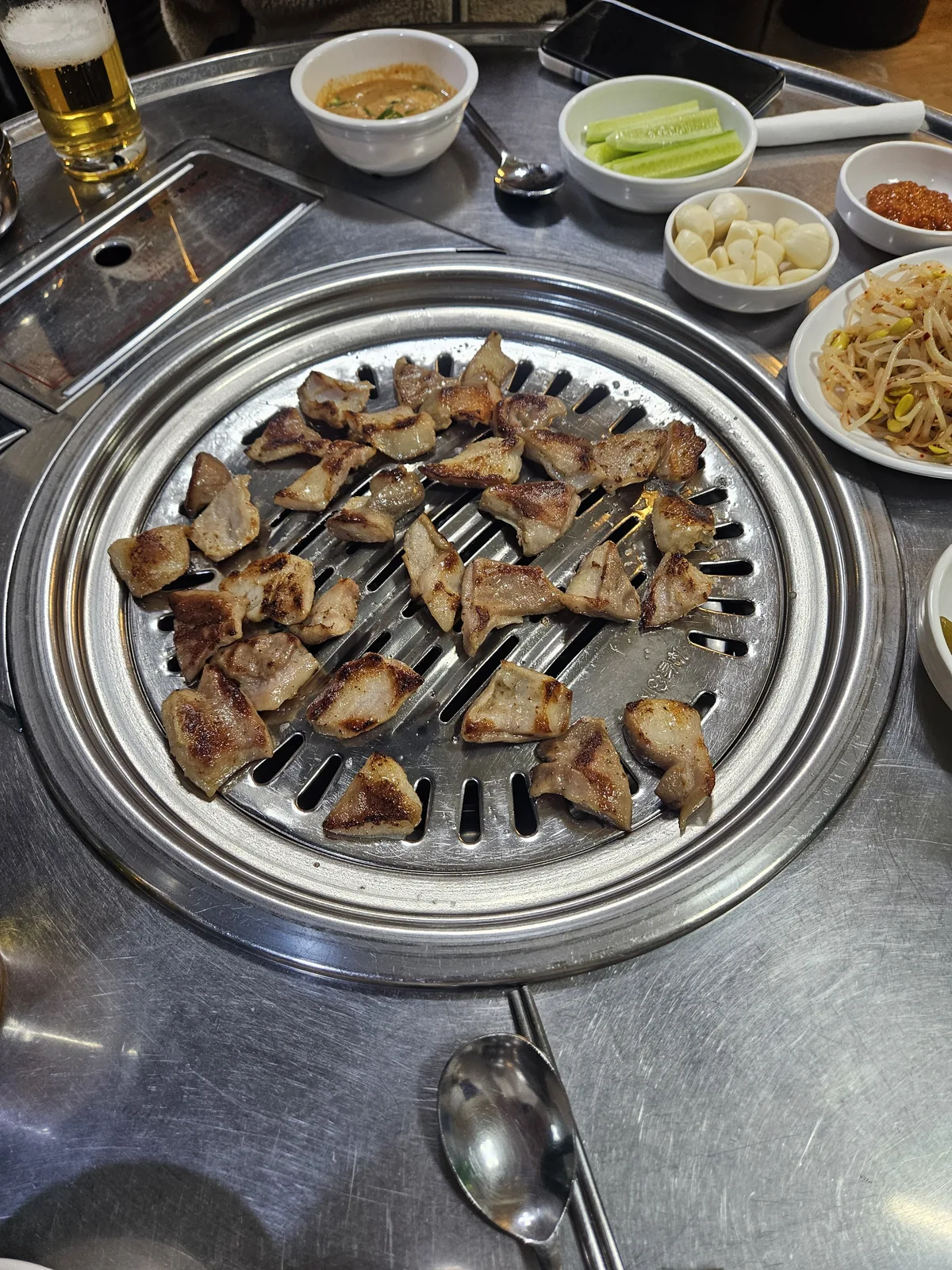
Makchang is beef offal — specifically the last chamber of a cow’s stomach. Grilled over charcoal until the outside crisps and the inside stays chewy and rich, then dipped in a sesame-oil-and-salt sauce. It’s a drinking food and an acquired one; if offal isn’t your thing, this isn’t the place to start.
If it is your thing, Saemgol is a quiet neighbourhood grill with no reservations and a dipping sauce that’s worth the trip on its own.

Dinner only, and hours vary — check before you go. No reservations. Beef makchang ₩23,000 per portion (~$17).
If you only have one night
- Arriving late and hungry, nothing else open? Namsanter. It’s 24 hours and army stew is a full meal.
- First time eating Korean food? Maissneundeng. Fishcake is mild, cheap, and impossible to get wrong.
- Want the thing you can’t get at home? Yajupocha for the roe octopus, in spring.
- Just want a good drink and something on a stick? Toriaez, and stay until it closes.
- Eating alone? Toriaez or Hoshi Ramen — both are counters, and nobody will look at you twice.
- Getting here: Sadang Station (Lines 2 & 4) or Isu / Chongshin University Station (Lines 4 & 7), one stop apart. Everything above is a 10–15 minute walk from one or the other.
- Cards: Accepted everywhere on this list.
- Language: Korean-only menus are normal. Photo menus are common; pointing is fine and expected.
- Closing days: Several places close Sunday. If you’re planning a Sunday night, Namsanter (24 hours) and Yongyong Seonsaeng are the safe calls.
- Budget: ₩10,000–15,000 per person at most of these. Yajupocha is the outlier at ₩50,000 for the octopus.
I’ll keep this updated as places open, close, or change their hours — this is my actual neighbourhood, so I’ll notice.
— Solyn